What Makes a Good Saddle Pad Manufacturer?
A good-looking saddle pad sample does not always mean the factory is a good saddle pad manufacturer. For equestrian brands, wholesalers, distributors, importers, and private-label buyers, the real test is whether the supplier can repeat the same material, shape, quilting, binding, logo placement, and packing quality in bulk production.
This is where many sourcing problems start. The sample looks fine, but the bulk order shows small differences: uneven quilting, softer padding, twisted binding, color variation, misplaced embroidery, or packaging that creates creases before the product reaches the warehouse.
A saddle pad may look simple from the outside, but buyers who have handled repeat orders know the details matter. Fabric selection, foam thickness, lining comfort, quilting consistency, shape accuracy, logo placement, packaging, and repeat-order records all affect product quality and brand trust.
This guide explains what makes a good saddle pad manufacturer and what wholesale buyers should check before starting OEM or private-label saddle pad production.

Quick Answer: What Should Buyers Look for in a Saddle Pad Manufacturer?
A good saddle pad manufacturer should be able to control both visible appearance and hidden production details. Buyers should not only ask whether the factory can make saddle pads, but whether it can make them consistently across different styles, sizes, colors, and repeat orders.
- Material knowledge: The factory should understand outer fabrics, lining materials, foam, felt, mesh, cotton, suede, velvet, and non-slip options.
- Pattern and sizing control: Saddle pad shape, spine length, drop length, wither clearance, and left-right symmetry should remain consistent.
- Quilting consistency: Stitch spacing, quilt pattern, padding distribution, and surface flatness should be stable in bulk production.
- Binding workmanship: Edges should be clean, smooth, and durable without twisting, puckering, or uneven stitching.
- Logo and private-label support: The factory should support embroidery, woven labels, rubber patches, heat transfer, hangtags, packaging, and carton marks.
- Sample-to-bulk control: The approved sample should not look better than the final shipment.
- Export packing capability: Products should be folded, packed, labeled, and carton-marked according to buyer requirements.
If you are comparing suppliers, the strongest factory is usually not the one that only gives the fastest price. It is the one that helps reduce product risk before bulk production begins.
Why Saddle Pads Are Easy to Underestimate
Many buyers treat saddle pads as a basic textile product. In reality, saddle pads involve multiple quality-control points that can affect comfort, appearance, durability, fit, and brand presentation.
A saddle pad combines fabric, padding, lining, quilting, binding, shaping, logo application, and packaging. If one detail is weak, the whole product can feel less professional.
Common problems in poorly controlled saddle pad production include uneven quilting, distorted shape, loose binding, inaccurate sizing, color inconsistency, embroidery misplacement, unstable foam thickness, and packaging creases.
For brands and wholesalers, these issues do not only create product defects. They also increase communication cost, delay warehouse receiving, and weaken customer trust.
1. Material Selection: A Good Manufacturer Understands Product Positioning
The first sign of a good saddle pad manufacturer is whether the factory can help match materials to the buyer’s target market and product positioning.
Different saddle pad lines need different material logic. A basic wholesale saddle pad, a premium dressage pad, a non-slip jumping pad, a breathable summer pad, and a decorative private-label collection should not all use the same material structure.
| Material Area | What Buyers Should Check | Why It Matters |
|---|---|---|
| Outer Fabric | Cotton, polyester, suede, velvet, satin, or technical fabric options | Affects appearance, durability, price level, and brand positioning |
| Lining | Cotton, mesh, quick-dry lining, fleece, or moisture-wicking materials | Affects comfort, breathability, sweat management, and perceived quality |
| Padding | Foam thickness, felt, sponge, polyfill, or layered construction | Affects structure, cushioning, shape retention, and bulk feel |
| Binding | Fabric binding, contrast binding, cord piping, or decorative trim | Affects edge durability, visual finish, and product tier |
| Non-Slip Area | Silicone grip, gel insert, anti-slip fabric, or reinforced panels | Affects function, cost, washing durability, and suitability for performance collections |
A professional manufacturer should not simply say “yes” to every material idea. If a material is unsuitable for the target price, use case, durability expectation, or bulk production stability, the factory should explain the risk early.
Common Saddle Pad Types and What Buyers Should Check
Not all saddle pads should be judged by the same standard. Different riding disciplines and sales channels require different shapes, materials, finishing levels, and quality-control points.
| Saddle Pad Type | Common Buyer Focus | Key Manufacturing Risk |
|---|---|---|
| Dressage Saddle Pads | Elegant shape, clean quilting, longer drop, refined binding, embroidery placement. | Shape distortion, uneven quilting, poor edge finishing, and logo placement that looks unbalanced. |
| Jumping Saddle Pads | Forward-cut shape, wither clearance, stable fit, durable fabric, neat straps. | Incorrect front curve, unstable strap position, and inconsistent left-right shape. |
| All Purpose Saddle Pads | Versatile fit, moderate padding, stable price level, broad size suitability. | Generic pattern control, inconsistent size grading, and weak perceived quality. |
| Half Pads | Shock absorption, correction function, gel or foam structure, shim pocket accuracy. | Uneven thickness, poor shaping, unstable correction effect, and uncomfortable edge pressure. |
| Non-Slip Saddle Pads | Grip performance, silicone pattern, material compatibility, washing durability. | Silicone peeling, weak grip, poor print alignment, or uncomfortable surface stiffness. |
This is why experienced buyers should not only ask for “saddle pads.” They should define the product type, riding use, price level, material direction, and target sales channel before sampling begins.
2. Pattern and Sizing Control Are Not Small Details
Saddle pad sizing is one of the easiest areas to overlook during sampling. A sample may look acceptable on a table, but bulk production requires repeatable pattern control.
Buyers should check whether the factory can control:
- spine length,
- drop length,
- wither clearance,
- front curve,
- left-right symmetry,
- strap placement,
- binding edge width,
- and size tolerance across bulk production.
This is especially important when developing dressage saddle pads, jumping saddle pads, all-purpose saddle pads, pony saddle pads, and half pads. Each product type has different shape expectations.
For more sizing reference, buyers can also review Carlson Saddlery’s guide on horse rug and saddle pad sizing standards.
3. Quilting Quality Shows the Factory’s Real Workmanship Level
Quilting is one of the clearest signs of saddle pad production quality. Even if the fabric looks good, poor quilting can immediately make a saddle pad look cheap or unstable.
Buyers should pay attention to:
- stitch spacing consistency,
- quilt pattern alignment,
- surface flatness,
- padding distribution,
- thread tension,
- needle marks,
- and whether the quilted surface twists after production.
A good sample does not always prove good bulk production. One carefully made sample can look excellent, but the real challenge is whether 500 or 2,000 pieces can maintain the same quilting standard.
4. Binding and Edge Finishing Decide the Final Quality Impression
Binding is one of the most visible workmanship details on a saddle pad. Uneven binding, loose edges, wrinkled corners, bulky seam transitions, or crooked stitching can quickly lower the perceived product tier.
A good saddle pad manufacturer should control:
- edge smoothness,
- corner handling,
- binding width consistency,
- piping alignment,
- decorative cord placement,
- stitching cleanliness,
- and final pressing or shaping.
For private-label buyers, this matters because customers often judge product quality from the details they can see immediately. Binding and edge finishing are among the first things buyers and end customers notice.
5. Logo and Private-Label Support Should Be Practical, Not Just Decorative
Many saddle pad buyers need custom branding. But private-label support is not only about putting a logo on the product. It includes placement, method, size, durability, packaging, and consistency.
Common branding options include:
- embroidery logo,
- woven label,
- rubber patch,
- leather-look patch,
- heat transfer logo,
- silicone print,
- custom hangtag,
- branded polybag,
- insert card,
- and carton mark customization.
A good private label equestrian products manufacturer should help buyers choose logo methods that fit the material and product level. For example, embroidery may work well for many saddle pads, but it must be positioned carefully to avoid pulling, distortion, or uncomfortable thickness.
6. Sample Development Must Be Linked to Bulk Production
One of the biggest risks in sourcing saddle pads is the gap between sample quality and bulk production quality.
A good manufacturer should make sure the approved sample is not treated as a one-off display piece. The sample should be a production reference that can realistically be repeated in bulk.
| Sample Stage Question | Why Buyers Should Ask |
|---|---|
| Is the sample using the same material planned for bulk? | Material substitutions can cause color, feel, thickness, and durability differences later. |
| Is the quilting pattern production-ready? | Some sample details may look good but be inefficient or unstable in mass production. |
| Is the logo position clearly documented? | Without a clear reference, logo placement may shift in bulk production. |
| Are size tolerances confirmed? | Small measurement differences can create fit and consistency complaints. |
| Is packaging confirmed before production? | Late packaging decisions often cause delays, wrong labels, or warehouse receiving issues. |
Buyers can also review our guide on sample vs bulk production in horse tack quality control to better understand where production differences often appear.
7. Bulk Production Consistency Is More Important Than One Good Sample
A factory that can make one good saddle pad is not always the same as a factory that can produce a stable bulk order.
Bulk saddle pad production requires control over cutting, quilting, sewing, binding, logo application, trimming, checking, folding, packing, and carton organization.
Buyers should ask whether the manufacturer can control:
- color consistency across fabric batches,
- stable padding thickness,
- accurate cutting and pattern shape,
- consistent quilting alignment,
- clean binding and stitching,
- correct logo placement,
- SKU separation,
- and repeat-order documentation.
In B2B supply, consistency is often more valuable than a sample that looks impressive but cannot be repeated.
8. Export Packing and Carton Marks Should Be Included in the Discussion
Packing is not the most exciting part of saddle pad sourcing, but it matters in real wholesale operations.
Poor packing can cause creases, product deformation, mixed SKUs, unclear carton identification, barcode problems, warehouse receiving delays, and unnecessary communication after shipment.
A good manufacturer should support:
- individual polybag packing,
- insert cards or hangtags,
- barcode stickers,
- size stickers,
- carton marks,
- SKU separation,
- carton weight control,
- and export-ready packing lists.
For more detail, see Carlson Saddlery’s guide on export packing standards for equestrian supplies.
Comparison Table: Average Supplier vs Good Saddle Pad Manufacturer
A strong supplier is not defined by one good sample photo. Buyers should look at how the manufacturer handles materials, samples, bulk production, branding, and packing as a complete system.
| Evaluation Point | Average Supplier | Good Saddle Pad Manufacturer |
|---|---|---|
| Material Selection | Offers basic fabric options without much product advice | Recommends materials based on product use, market level, and buyer requirements |
| Sample Development | Focuses on making one sample look acceptable | Develops samples that can be realistically repeated in bulk production |
| Quilting Control | May show uneven spacing or inconsistent stitch tension | Controls quilt pattern, spacing, surface flatness, and thread consistency |
| Binding Workmanship | Edges may twist, wrinkle, or show uneven stitching | Maintains clean edge finishing, stable binding width, and smooth corners |
| Private Label Support | Only adds simple logo or label | Supports logo method selection, label placement, hangtags, packaging, and carton marks |
| Bulk Consistency | Bulk order may differ from approved sample | Documents specifications and controls sample-to-bulk consistency |
| Export Packing | Uses basic packing without much buyer-specific detail | Supports SKU separation, barcode labels, carton marks, packing lists, and warehouse-friendly packing |
Saddle Pad Manufacturer Evaluation Framework for Buyers
When comparing suppliers, buyers should pay attention to the quality of the supplier’s answers. A weak supplier often gives broad promises. A better manufacturer explains how the work will actually be controlled.
| Buyer Concern | Weak Supplier Response | Better Manufacturer Response |
|---|---|---|
| Material Selection | “We can use any fabric you want.” | Explains which fabrics are suitable for the target market, product tier, durability needs, and bulk production stability. |
| Sample Development | Only confirms appearance from photos. | Checks fabric, padding, quilting, binding, logo placement, size tolerance, and packing before sample approval. |
| Bulk Consistency | Promises bulk will be “same as sample” without clear control points. | Keeps approved sample records, material references, size specs, logo measurements, and production notes. |
| Private Label Support | Only offers simple logo embroidery. | Supports logo method selection, woven labels, hangtags, insert cards, barcode stickers, polybags, and carton marks. |
| Quality Control | Only says “we inspect before shipment.” | Defines inspection points for quilting, binding, symmetry, stitching, logo position, color, size, and packing accuracy. |
| Repeat Orders | Rechecks details from the beginning each time. | Maintains product records for fabric, color, pattern, logo, labels, packaging, and buyer-specific requirements. |
Buyer Checklist: Questions to Ask Before Choosing a Saddle Pad Manufacturer
Before placing an OEM or private-label saddle pad order, buyers should ask these questions:
- Can the factory show saddle pad production experience, not only general textile experience?
- Can the factory recommend suitable materials based on target market and product level?
- Can the factory control saddle pad pattern shape, size tolerance, and symmetry?
- Can the factory maintain quilting consistency across bulk production?
- Can the factory handle binding, piping, decorative trim, and edge finishing cleanly?
- Can the factory support embroidery, labels, patches, hangtags, and branded packaging?
- Will the bulk order use the same approved material and construction as the sample?
- Can the factory provide clear packing, carton marks, and SKU separation?
- Can the factory support repeat orders with documented specifications?
- Does the supplier communicate risks before production, instead of only after problems appear?
How Carlson Saddlery Supports Saddle Pad Buyers
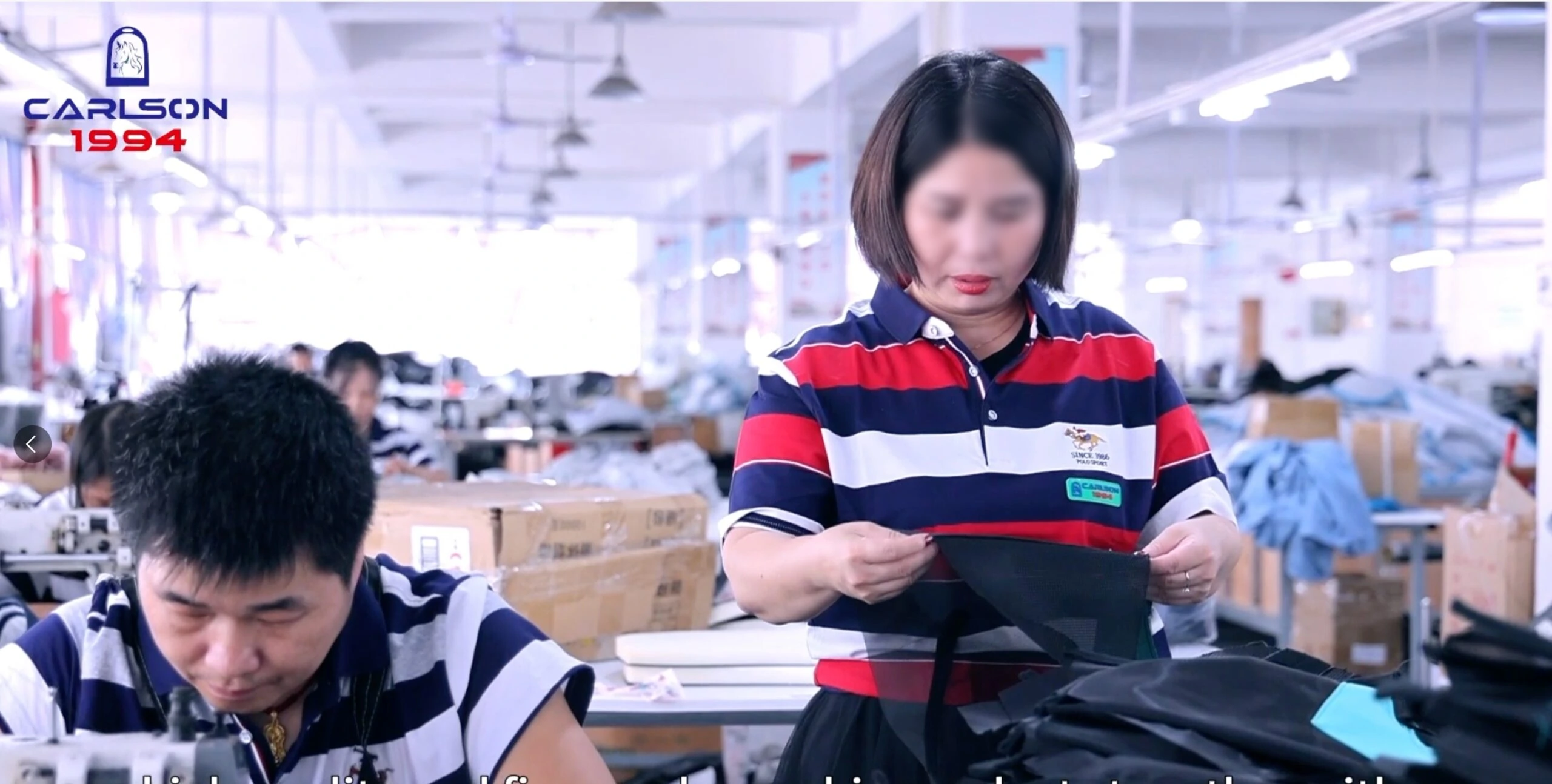
Carlson Saddlery is a professional saddle pad manufacturer and horse tack supplier founded in 1994. We support overseas equestrian brands, wholesalers, distributors, importers, and private-label buyers with OEM manufacturing, sample development, custom branding, export packing, and repeat bulk supply.
Our saddle pad manufacturing support includes material selection, shape development, quilting options, binding and piping, logo customization, private-label packaging, sample review, bulk production, quality checks, and shipment preparation.
Buyers can also explore our wholesale equestrian product categories or contact Carlson Saddlery to discuss saddle pads, half pads, horse rugs, fly masks, horse boots, halters, lead ropes, and coordinated tack collections.
FAQ: Saddle Pad Manufacturer
What does a saddle pad manufacturer do?
A saddle pad manufacturer produces saddle pads for equestrian brands, wholesalers, distributors, and private-label buyers. The work may include material sourcing, pattern development, quilting, sewing, binding, logo application, packaging, and bulk production.
Can saddle pads be customized for private-label brands?
Yes. Saddle pads can be customized with different fabrics, colors, quilting patterns, binding, piping, embroidery, woven labels, rubber patches, hangtags, insert cards, polybags, and carton marks.
What should buyers check before approving a saddle pad sample?
Buyers should check material, size, shape, quilting, padding thickness, binding, stitching, logo position, color, label placement, packaging, and whether the sample can be repeated in bulk production.
Why does saddle pad bulk quality sometimes differ from the sample?
Bulk quality may differ because of material batch changes, weak production documentation, inconsistent cutting, quilting variation, logo placement issues, or insufficient quality control before shipment.
What is important for wholesale saddle pad packing?
Wholesale saddle pad packing should protect product shape, avoid heavy creasing, separate SKUs clearly, include correct barcode or size labels, and use carton marks that support warehouse receiving and shipment checking.
Does Carlson Saddlery manufacture custom saddle pads?
Yes. Carlson Saddlery supports custom saddle pad manufacturing for OEM and private-label buyers, including material selection, sample development, logo customization, branded packaging, bulk production, and export packing.
Final Thoughts
A good saddle pad manufacturer is not just a supplier that can make a nice-looking sample. The real value is whether the factory can help buyers control product details, reduce sourcing risk, and maintain stable quality across bulk production and repeat orders.
For equestrian brands and wholesalers, the right manufacturing partner should understand materials, sizing, quilting, binding, logo customization, packing, and commercial product planning. These details decide whether a saddle pad line feels professional, repeatable, and suitable for long-term wholesale business.
To discuss OEM or private-label saddle pad production, visit our Saddle Pad Manufacturer page or contact Carlson Saddlery with your product requirements.