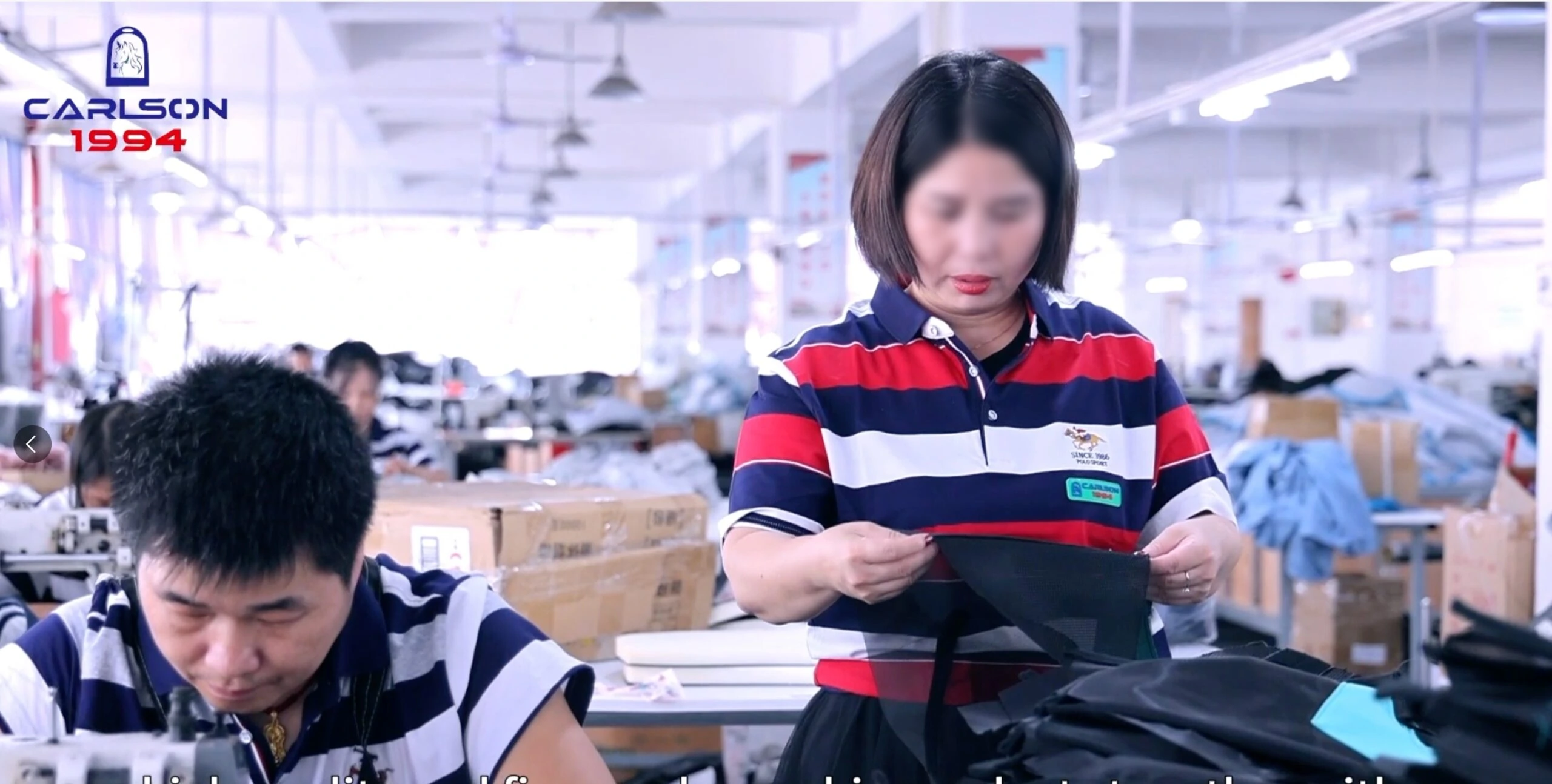
Sample vs Bulk Production: Why Horse Tack Quality Changes

For equestrian brands, wholesalers, distributors, importers, and private-label buyers, one of the most frustrating sourcing problems is simple:
The sample looks good, but the bulk production does not feel exactly the same.
This problem is common in horse tack and equestrian products because many items look straightforward from the outside. A saddle pad may look like fabric, foam, quilting, and binding. A fly mask may look like mesh, edging, and hook-and-loop closure. A horse boot may look like outer material, inner lining, and straps.
But in real manufacturing, the difference between a good sample and stable bulk production depends on many small details: material batches, cutting accuracy, stitching control, worker consistency, logo placement, packaging method, and final inspection standards.
This article explains why horse tack quality can change between sample approval and bulk production, and what professional buyers should check before placing larger OEM or private-label orders.
Quick Answer: Why Does Horse Tack Quality Change from Sample to Bulk?
Horse tack quality usually changes from sample to bulk production because a sample is made in a small quantity with more manual attention, while bulk production requires repeated control across hundreds or thousands of units. If materials, patterns, stitching, logo placement, inspection standards, and packing instructions are not clearly confirmed, small differences can appear during mass production.
For buyers sourcing from a horse tack manufacturer in China, the key is not only whether the supplier can make one good sample. The real question is whether the approved result can be repeated consistently in bulk.
Why Samples Often Look Better Than Bulk Production
A sample is usually produced in a very different environment from bulk production. It is often handled by more experienced workers, checked more carefully, and adjusted several times before being sent to the buyer.
That is not necessarily dishonest. It is simply how sample development works. The supplier wants to show the buyer the intended result. The buyer also expects a clean sample before confirming the order.
The risk starts when the buyer treats the sample as proof that every bulk unit will automatically match it.
In reality, bulk production introduces more variables:
- larger material quantities
- multiple production workers
- faster sewing speed
- cutting stack variation
- batch-to-batch color differences
- different handling during packing
- more pressure on production schedule
This is why sample approval should be treated as the beginning of production control, not the end of it.
Sample vs Bulk Production: Key Differences Buyers Should Understand
| Area | Sample Production | Bulk Production | Buyer Risk |
|---|---|---|---|
| Quantity | Usually 1–3 pieces | Hundreds or thousands of units | A good sample does not automatically prove repeatability. |
| Worker Attention | Often handled more slowly and carefully | Produced faster by multiple workers | Stitching, binding, and finishing may become less consistent. |
| Materials | May use available stock or sample material | May require new bulk material or dye batch | Color, hand feel, thickness, or coating may change. |
| Cutting | Small quantity, easier to control | Stack cutting and larger production flow | Shape, symmetry, or size variation may appear. |
| Logo & Label | Usually positioned carefully by hand | Needs repeatable placement rules | Logo position, label direction, or barcode placement may drift. |
| Packing | Often packed carefully for approval | Must follow a repeatable packing SOP | Creasing, deformation, SKU mixing, or carton mark errors may happen. |
1. Material Differences Between Sample and Bulk
Material difference is one of the most common reasons horse tack bulk production feels different from the approved sample.
In sample development, the factory may use available stock fabric, small-roll material, or a fabric batch that is close to the buyer’s target. But for bulk production, a new material batch may need to be ordered or dyed.
Even when the material type is the same, differences can still appear in:
- fabric weight
- hand feel
- mesh stiffness
- color tone
- coating thickness
- lining softness
- elastic recovery
- hook-and-loop grip strength
For example, a saddle pad manufacturer may make a sample using a fabric that looks correct, but if the bulk fabric has a slightly different thickness or softness, the final pad may feel less structured or less premium.
The same issue happens with fly masks and horse boots. Mesh that is slightly softer, stiffer, thinner, or less stable can change the final wearing experience.
What buyers should confirm
- Is the sample material the same as the planned bulk material?
- Will the bulk fabric come from the same supplier or same specification?
- Are color references confirmed by physical swatch, Pantone, or approved sample?
- Are lining, binding, hook-and-loop, and hardware all confirmed?
- Will the factory keep one approved sample as the production reference?
2. Cutting and Pattern Control Can Change the Fit
Many horse tack products are not simple flat goods. Shape and fit matter. This is especially true for saddle pads, fly masks, horse boots, horse rugs, and horse blankets.
In a sample, cutting is often done slowly and carefully. In bulk production, cutting is usually done in larger stacks. If the fabric shifts, the cutting knife moves slightly, or the pattern control is loose, the finished product may change in shape.
This can lead to:
- left-right asymmetry
- slight size variation
- uneven edges
- poor fit
- inconsistent neck or leg placement
- different final product appearance
For fly masks, small pattern changes may affect eye clearance, ear placement, or face fit. For horse boots, small differences can affect symmetry, strap position, and how secure the boot feels in use.
What buyers should confirm
- Are final patterns confirmed before bulk cutting?
- Is the approved sample used as a size and shape reference?
- Does the factory check first bulk pieces before full production continues?
- Are size tolerances clearly agreed?
- Are left-right pairs checked for symmetry?
3. Stitching Quality Is Harder to Keep Stable at Scale
Stitching is one of the clearest signs of production consistency. A sample may have clean stitching because it receives more attention. In bulk production, stitching quality depends on worker skill, machine setup, thread tension, sewing speed, and production supervision.
Common bulk stitching issues include:
- uneven stitch lines
- loose threads
- inconsistent quilting
- wrinkled binding
- weak reinforcement points
- bulky seam transitions
- inconsistent edge finishing
These problems may not always make the product unusable, but they can lower the perceived quality quickly. For private-label equestrian products, this matters because customers judge the brand, not only the factory.
This is especially important for private label equestrian products, where the product must look consistent across different SKUs and repeat orders.
What buyers should confirm
- Which stitching points are most important for inspection?
- Are reinforcement points clearly marked?
- Is binding quality checked in bulk?
- Are loose threads trimmed before packing?
- Is there a first-piece inspection before mass sewing continues?
4. Logo and Label Placement Can Drift in Bulk Production
Logo placement looks simple, but it is one of the most common sources of buyer frustration in OEM and private-label production.
In a sample, the logo may be positioned carefully by one worker. In bulk production, if the placement is not clearly measured, logo position can drift from piece to piece.
This can affect:
- embroidered logos
- woven labels
- rubber patches
- printed logos
- hangtag placement
- size labels
- barcode stickers
The product may still be functional, but brand presentation becomes inconsistent. For buyers building a serious private-label line, this is not a small issue.
What buyers should confirm
- Is logo placement measured from fixed reference points?
- Is the logo size confirmed before bulk production?
- Are label position and direction clearly shown in photos or drawings?
- Are barcode and size stickers applied consistently?
- Are packaging and carton marks checked before shipment?
5. Hardware and Closure Quality May Not Be Fully Tested in Samples
Many horse tack products rely on hardware and closures: buckles, D-rings, snaps, surcingles, straps, hook-and-loop fasteners, and elastic parts.
These parts may look fine in a sample, but problems often appear after repeated use or during bulk quality checks.
Common issues include:
- hook-and-loop grip becoming weak
- strap length not matching the size range
- hardware finish being inconsistent
- buckles scratching fabric during packing
- metal parts oxidizing or marking light fabrics
- elastic losing recovery too quickly
These issues are especially important for horse boots, fly masks, horse rugs, and horse blankets because the customer quickly notices when a product does not stay secure.
What buyers should confirm
- Are hardware specs confirmed before bulk production?
- Is hook-and-loop quality checked for grip strength?
- Are strap length and placement checked across sizes?
- Are buckles and metal parts protected during packing?
- Are closure points reinforced where needed?
6. Packing Can Change Product Appearance After Shipment
Sometimes the bulk product leaves the factory in acceptable condition but arrives looking worse because of poor packing.
This is common with equestrian textiles because products are often soft, shaped, padded, or structured. If packing pressure is too high, folding is wrong, or hardware is not protected, the product may arrive with avoidable problems.
Typical packing-related issues include:
- creased saddle pads
- crushed fly mask eye darts
- rug buckles scratching fabric
- deformed horse boots
- moisture odor after sea freight
- mixed colors or sizes in cartons
- unclear carton marks
Buyers should treat packing as part of quality control, not only logistics. For more detail, see our export packing guide for equestrian supplies.
What buyers should confirm
- Is folding method confirmed for each product category?
- Are buckles, snaps, and hardware protected?
- Are fly masks packed to avoid eye-area deformation?
- Are carton marks clear for warehouse receiving?
- Are packing lists detailed by SKU, color, and size?
7. Communication Gaps Create Production Gaps
Many sample-to-bulk problems are not caused by bad intentions. They are caused by unclear communication.
If a buyer says “same as sample,” but the supplier does not have a clear written production standard, both sides may understand the details differently.
Buyers should avoid relying only on:
- chat messages
- verbal confirmation
- unclear reference photos
- old samples with changed materials
- generic product descriptions
A better approach is to confirm a simple production specification sheet before bulk production starts.
A useful production sheet should include:
- product name and item number
- approved sample photo
- material and color references
- size range and tolerance
- logo position and label method
- hardware and closure specifications
- packing method
- carton mark requirements
- key inspection points
Common Sample-to-Bulk Quality Risks by Product Category
Different horse tack products have different sample-to-bulk risks. Buyers should not use the same inspection logic for every category.
| Product Category | Common Bulk Production Risk | What Buyers Should Check |
|---|---|---|
| Saddle Pads | Quilting inconsistency, binding wrinkles, foam thickness variation, logo placement drift. | Check quilting lines, pad shape, edge binding, thickness, embroidery or label position. |
| Fly Masks | Mesh too soft or too stiff, eye clearance changes, uneven binding, weak hook-and-loop closure. | Check mesh structure, eye area clearance, ear placement, edge finishing, closure strength. |
| Horse Boots | Strap placement variation, left-right asymmetry, inner lining discomfort, weak fastening grip. | Check pair symmetry, strap length, closure grip, inner comfort, edge stitching, support structure. |
| Horse Rugs / Blankets | Fabric batch differences, buckle placement issues, size tolerance problems, packing deformation. | Check denier fabric, waterproof coating, buckle strength, sizing, seam finish, folding method. |
| Halters & Lead Ropes | Webbing color variation, hardware inconsistency, stitching strength issues, size grading errors. | Check webbing width, hardware finish, stitch reinforcement, sizing, color consistency. |
| Fly Veils & Bandages | Color mismatch, logo embroidery inconsistency, elastic recovery changes, packaging mix-ups. | Check color matching, embroidery position, fabric stretch, size labels, SKU packing accuracy. |
Buyer Checklist: How to Reduce Sample-to-Bulk Quality Risk
Before confirming a horse tack bulk order, buyers should check these points:
- Keep one approved sample: The factory and buyer should both keep a confirmed reference sample.
- Confirm bulk materials: Do not assume sample material and bulk material are automatically the same.
- Set clear size tolerance: Especially for saddle pads, fly masks, horse boots, rugs, and blankets.
- Define logo placement: Use measurements, photos, or drawings instead of vague instructions.
- Check first bulk pieces: Review early production pieces before the full order continues.
- Control stitching and binding: These details often reveal the real production level.
- Confirm packing method: Poor packing can damage good products before they reach the buyer.
- Use a written specification sheet: This reduces misunderstanding between sample and bulk production.
What This Means for Private-Label Buyers
Private-label buyers have more at risk because the end customer sees the buyer’s brand, not the supplier’s factory.
If the bulk production has inconsistent stitching, poor logo placement, weak closures, mixed sizes, or rough packing, the problem becomes a brand problem.
This is why private-label equestrian product development should focus on repeatability. A good supplier should help buyers control:
- approved samples
- material consistency
- color and size records
- logo and label placement
- bulk inspection points
- packing and carton marks
- repeat-order documentation
For brands developing long-term product lines, this kind of control is often more valuable than chasing the lowest unit price.
How Carlson Saddlery Helps Reduce Sample-to-Bulk Differences
Carlson Saddlery supports overseas equestrian brands, wholesalers, distributors, importers, and private-label buyers with OEM horse tack manufacturing, product development, sample confirmation, bulk production, packing control, and repeat order support.
Our production categories include saddle pads, half pads, horse rugs, horse blankets, fly sheets, fly masks, horse boots, halters, lead ropes, girths, fly veils, bandages, grooming products, stable supplies, and related equestrian accessories.
For buyers comparing suppliers, the important question is not only “Can you make this sample?” A better question is:
Can this factory repeat the approved result in bulk production?
That is where material confirmation, production records, inspection points, and export packing standards become important.
FAQ: Sample vs Bulk Production in Horse Tack Manufacturing
Why does a horse tack sample look better than bulk production?
A sample usually receives more manual attention and may be made slowly by experienced workers. Bulk production involves larger quantities, more workers, faster operations, and more variables, so quality control must be clearly managed.
How can buyers reduce sample-to-bulk quality differences?
Buyers should confirm materials, size tolerances, logo placement, stitching requirements, packing method, and inspection points before production. Keeping an approved sample as a production reference is also important.
What horse tack products are most affected by sample-to-bulk differences?
Saddle pads, fly masks, horse boots, horse rugs, horse blankets, halters, fly veils, and bandages can all be affected because they depend on material consistency, stitching, shape, fit, and finishing control.
Why is bulk production harder to control than sampling?
Bulk production requires repeatability across many units. Small differences in material batch, cutting, sewing, logo placement, or packing can become visible when hundreds or thousands of pieces are produced.
Should buyers approve bulk materials separately from the sample?
Yes. Buyers should confirm that bulk materials match the approved sample in color, weight, hand feel, coating, lining, and performance requirements where relevant.
Can Carlson Saddlery support sample development before bulk orders?
Yes. Carlson Saddlery supports sample development, material confirmation, logo customization, packaging review, and bulk production for OEM and private-label equestrian products.
Final Thoughts
Sample-to-bulk quality differences are one of the most important issues in horse tack sourcing. A good sample is important, but it is not enough on its own.
Professional buyers should focus on whether the supplier can repeat the approved sample result across bulk production, packing, and repeat orders.
If you are planning an OEM or private-label horse tack project, Carlson Saddlery can help review product requirements, sample details, materials, logo placement, packing needs, and bulk production planning before the order moves forward.
To discuss your next project, you can contact Carlson Saddlery or browse our wholesale equestrian product categories.