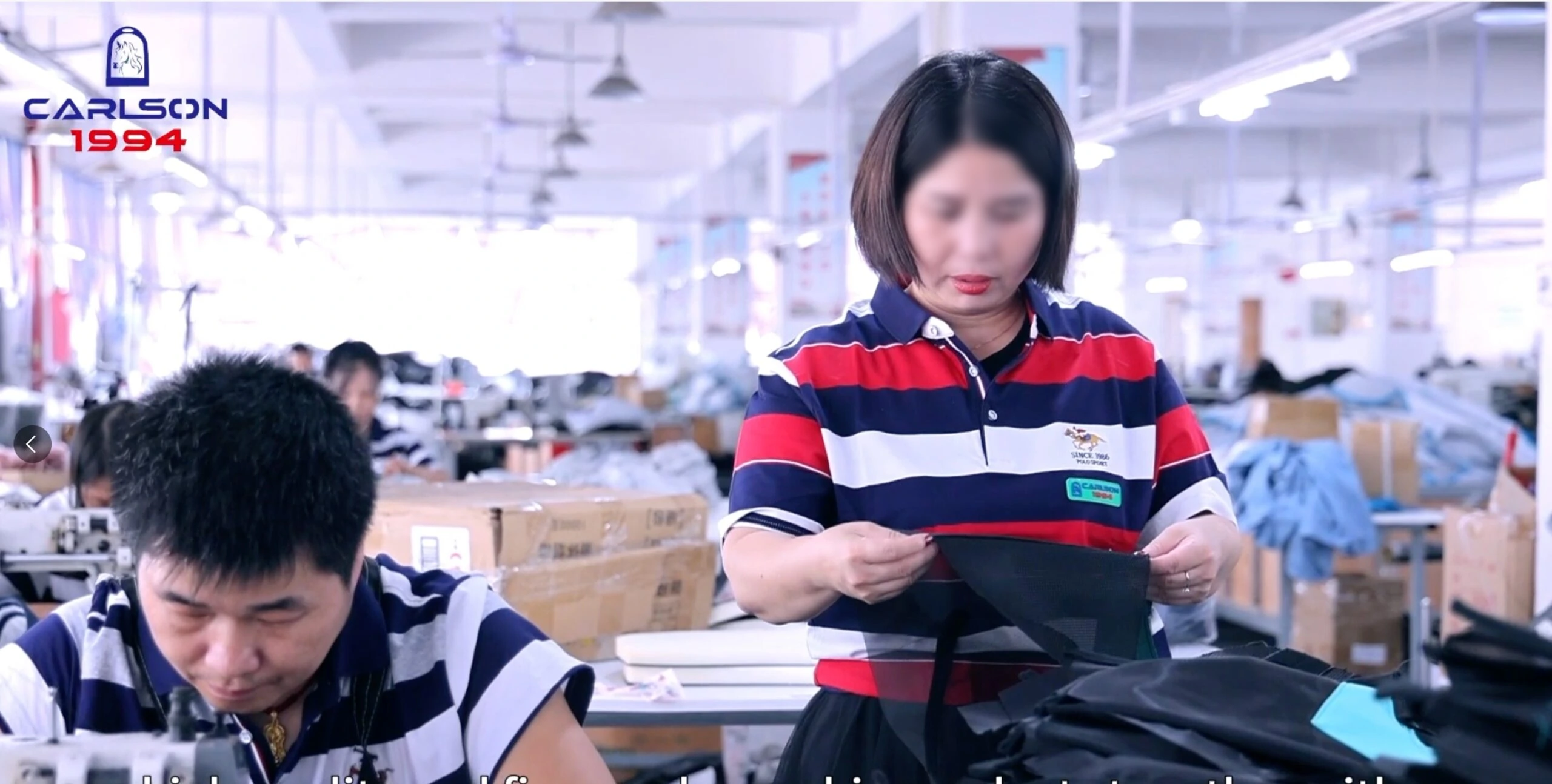
How to Choose a Horse Tack Manufacturer in China

Choosing a horse tack manufacturer in China is not just about finding the lowest price. For equestrian brands, wholesalers, distributors, importers, and private-label buyers, the bigger question is whether the supplier can support stable product quality, clear sampling, reliable bulk production, export packing, and long-term repeat orders.
Horse tack and equestrian products are detail-sensitive. A saddle pad, horse blanket, fly mask, horse boot, halter, or lead rope may look simple in photos, but small differences in material, stitching, shape, hardware, fit, and packaging can affect customer complaints, returns, and brand reputation.
This guide explains what buyers should check before choosing a China-based horse tack factory for OEM or private-label equestrian product manufacturing.
Quick Answer: What Makes a Good Horse Tack Manufacturer in China?
A good horse tack manufacturer in China should have real production experience, clear product category capability, sample development support, stable bulk production control, private-label customization options, export packing knowledge, and responsive communication. The best supplier is not always the cheapest one. It is the one that can reduce sourcing risk and help your product line remain consistent over time.
If you are sourcing from overseas, the most important question is not only “Can you make this product?” A better question is:
Can this factory repeat the approved sample quality in bulk production and support my brand requirements consistently?
China Horse Tack Manufacturer Selection Checklist
Before comparing quotations, buyers should use a structured checklist. This helps avoid choosing a supplier based only on price or attractive sample photos.
| Evaluation Area | What Buyers Should Check | Why It Matters |
|---|---|---|
| Product Capability | Does the factory make your target products, such as saddle pads, horse rugs, fly masks, horse boots, halters, or stable supplies? | A supplier with category experience understands common quality risks and buyer requirements better. |
| OEM / Private Label Support | Can they support logo, label, hangtag, packaging, color, material, and sample development? | Brand buyers need more than basic production. They need products that fit their market and brand system. |
| Sample Development | Can they develop samples from photos, drawings, reference samples, or specifications? | A clear sample process helps reduce misunderstanding before bulk production. |
| Bulk Quality Control | Do they check material, size, stitching, logo placement, packaging, and carton marks before shipment? | Many problems happen when the bulk order does not match the approved sample. |
| Export Packing | Do they understand polybags, PVC bags, barcode labels, carton marks, moisture control, and SKU packing? | Packing affects warehouse receiving, shipping damage, and customer presentation. |
| Communication | Do they respond clearly, confirm details in writing, and ask practical questions? | Good communication reduces sampling delays, wrong assumptions, and production mistakes. |
| Repeat Order Stability | Can they keep product records, approved materials, labels, packaging, and order notes? | Long-term buyers need consistency across repeat orders, not only one successful shipment. |
1. Check Whether the Factory Understands Your Product Category
Not every textile factory or general trading company understands horse tack. Equestrian products have category-specific requirements that are easy to underestimate.
For example, saddle pads require attention to quilting, foam thickness, shape, binding, spine clearance, and logo placement. Fly masks require mesh structure, eye clearance, ear comfort, and hook-and-loop reliability. Horse boots require fastening strength, left-right symmetry, inner comfort, and repeated-use durability.
When choosing a horse tack manufacturer in China, buyers should first confirm whether the supplier has experience with the exact product categories they need.
Product categories buyers should confirm
- saddle pads and half pads
- horse rugs and horse blankets
- fly masks and fly protection products
- horse boots and leg protection
- halters, lead ropes, and daily-use tack
- girths, fly veils, bandages, and accessories
- grooming products, stable supplies, and yard accessories
A supplier does not need to make every equestrian product in the market. But they should have enough experience in your target category to understand the risks before production starts.
2. Distinguish Between a Real Manufacturer and a General Trading Company
Some buyers search for a horse tack supplier and assume every supplier is a factory. That is not always true. Some companies are trading companies that source from different factories. This is not always bad, but buyers should understand what type of supplier they are working with.
A real manufacturer usually has better control over sampling, production scheduling, workmanship standards, quality inspection, and repeat-order records. A trading company may offer broader product variety, but production control may be less direct.
Questions to ask before choosing a supplier
- Do you manufacture these products in your own factory?
- Which product categories are made in-house?
- Can you provide sample development and bulk production under the same production system?
- Who controls quality inspection before shipment?
- Can you keep approved samples and production records for repeat orders?
If a supplier avoids clear answers, that is a warning sign. Professional buyers need transparency, not vague promises.
3. Review OEM and Private Label Capability
Many buyers are not only sourcing generic products. They need OEM horse tack manufacturing or private label equestrian products that can carry their brand identity.
A qualified horse tack manufacturer should be able to support at least some of the following options:
- custom product development based on reference samples or photos
- logo embroidery, woven labels, rubber patches, or printed logos
- custom hangtags, insert cards, barcode labels, and size stickers
- custom polybags, PVC handle bags, and retail packaging
- material, color, hardware, binding, and stitching options
- carton marks and export packing requirements
- repeat-order records for long-term brand consistency
The important point is this: private label is not only “putting a logo on a product.” Buyers should confirm whether the supplier can manage label placement, packaging accuracy, barcode requirements, and carton-level identification properly.
OEM vs Private Label: Which Supplier Capability Do You Need?
Before choosing a manufacturer, buyers should understand whether their project is closer to OEM or private label. The supplier’s capability should match the project type.
| Project Type | Best Fit | What the Manufacturer Must Support |
|---|---|---|
| OEM Horse Tack | Buyers with custom designs, special product specifications, or stronger differentiation needs. | Pattern development, material sourcing, sample adjustment, technical confirmation, and bulk production control. |
| Private Label Equestrian Products | Brands and wholesalers who want faster launch using existing or semi-standard product structures. | Logo, label, hangtag, color selection, packaging, barcode, carton mark, and repeat order consistency. |
| Wholesale Standard Products | Buyers who need basic product supply with less customization. | Stable quality, clear MOQ, product availability, export packing, and reliable delivery communication. |
If you are unsure which model fits your business, you can review our guide: OEM vs Private Label Equestrian Products.
4. Look Carefully at the Sample Development Process
A strong sample does not guarantee a strong bulk order, but a weak sample process almost always creates problems later.
A professional manufacturer should help buyers confirm product specifications before moving into mass production. This includes materials, size, shape, color, logo placement, stitching, hardware, packaging, and carton marks.
Before approving a sample, buyers should check:
- Does the sample use the same material planned for bulk production?
- Are colors confirmed by physical swatch, Pantone, or approved sample?
- Is logo placement measured and recorded?
- Are size tolerances clearly agreed?
- Is the packing method checked before bulk production?
- Will the factory keep an approved sample as production reference?
Many sourcing problems come from assuming that “sample approved” means “bulk will automatically match.” In reality, bulk production needs its own control process.
For more detail, read our article on sample vs bulk production quality control.
5. Ask How the Factory Controls Bulk Production Quality
Bulk production is where a manufacturer’s real capability becomes visible. One good sample can be made carefully, but a full production order requires consistency across many units.
For horse tack and equestrian products, quality control should not only check whether the product looks acceptable. It should also check details that affect fit, use, brand presentation, and warehouse receiving.
Important bulk quality control points include:
- material consistency between sample and bulk
- cutting accuracy and size tolerance
- stitching, binding, quilting, and reinforcement quality
- left-right symmetry for horse boots and paired products
- mesh structure and eye clearance for fly masks
- hardware strength, closure placement, and hook-and-loop quality
- logo, label, hangtag, barcode, and size sticker accuracy
- folding, packing, carton marks, and SKU separation
Buyers should ask suppliers how they check these points before shipment. A supplier that only says “we check quality” without explaining what they check may not have a clear process.
6. Evaluate Product-Specific Manufacturing Risks
Different equestrian products fail in different ways. A good horse tack manufacturer should understand these risks and help buyers avoid them.
| Product Category | Common Manufacturing Risks | What Buyers Should Ask |
|---|---|---|
| Saddle Pads | Uneven quilting, binding wrinkles, shape inconsistency, foam thickness variation, logo placement drift. | How do you control quilting, binding, size tolerance, padding thickness, and embroidery position? |
| Horse Rugs / Blankets | Fabric batch differences, waterproof coating inconsistency, weak buckles, size fit issues, packing deformation. | How do you confirm denier fabric, coating, filling, hardware, size chart, and carton packing? |
| Fly Masks | Mesh too soft, eye clearance problems, uneven binding, weak hook-and-loop closure, poor ear fit. | How do you check mesh structure, eye area clearance, ear fabric, binding, and closure strength? |
| Horse Boots | Left-right asymmetry, poor inner comfort, strap position variation, weak fastening grip, shape instability. | How do you check pair symmetry, strap length, inner lining, stitching, and fastening durability? |
| Halters & Lead Ropes | Webbing color variation, hardware inconsistency, weak stitching, incorrect sizing, rough edges. | How do you control webbing, hardware finish, reinforcement stitching, size grading, and color consistency? |
| Fly Veils & Accessories | Color mismatch, embroidery inconsistency, shape variation, fabric stretch differences, packing mix-ups. | How do you control color matching, logo placement, fabric stretch, and SKU packing accuracy? |
These category-specific checks are important because a general inspection list is not enough for equestrian products.
7. Compare MOQ Carefully, Not Emotionally
MOQ is one of the first questions buyers ask, but it is often misunderstood. A lower MOQ is not always better if it creates unstable material sourcing, higher unit cost, or inconsistent production.
MOQ can be affected by:
- fabric minimum order requirements
- custom color dyeing
- hardware sourcing
- logo method
- packaging customization
- production line setup
- product complexity
- number of sizes and colors
A serious manufacturer should be able to explain why MOQ is required, not just give a number. Buyers should also understand that standard products, private-label products, and full OEM products usually have different MOQ logic.
8. Check Export Packing and Carton Mark Capability
Packing is often ignored during supplier selection, but it matters a lot for equestrian products. Good packing protects the product, supports warehouse receiving, and reduces after-sales problems.
For example, saddle pads can crease if folded poorly. Fly masks can deform if the eye area is crushed. Horse rugs and blankets need hardware protection and moisture control. Private-label orders need accurate hangtags, barcode labels, size stickers, and carton marks.
A good supplier should support:
- individual polybags or custom PVC bags
- hangtags, insert cards, barcode labels, and size stickers
- hardware protection for buckles and metal fittings
- desiccant or moisture-control packing where needed
- clear carton marks and SKU information
- packing lists by item, color, size, and carton number
- solid or assorted packing according to buyer requirements
For more detail, see our export packing guide for equestrian products.
9. Pay Attention to Communication Quality
Good communication is not just about fast replies. A good supplier asks the right questions, confirms details clearly, and helps buyers avoid mistakes before production begins.
Buyers should be cautious if a supplier says “yes” to everything without asking practical questions. In OEM and private-label manufacturing, too many easy promises can create problems later.
Signs of better supplier communication
- they ask about target market and sales channel
- they confirm product category, quantity, size, and material details
- they clarify logo, label, and packaging requirements
- they explain MOQ and production limitations honestly
- they provide practical suggestions when an idea may not work well
- they confirm important points in writing
For B2B buyers, a supplier who gives honest correction is often more valuable than one who simply agrees with everything.
10. Think About Repeat Orders Before the First Order
Many buyers focus only on the first order. But for brands, wholesalers, and distributors, the real value of a supplier is whether they can support repeat business.
Repeat order consistency depends on records. A good manufacturer should keep product specifications, approved samples, material references, color standards, logo placement, packaging details, and buyer-specific requirements.
Repeat-order records should include:
- approved sample photos
- fabric and material references
- color standards
- size chart and tolerance
- logo placement measurements
- label and packaging requirements
- carton mark format
- inspection points and order notes
Without these records, repeat orders may slowly drift in color, material, fit, packaging, or finishing quality.
Red Flags When Choosing a Horse Tack Manufacturer in China
Buyers should be careful when they notice the following warning signs:
- the supplier cannot clearly explain whether they are a factory or trading company
- they quote before understanding product details
- they promise very low MOQ for every custom project
- they avoid discussing sample-to-bulk consistency
- they do not ask about logo, packaging, or target market
- they cannot explain inspection points by product category
- they have no clear export packing or carton mark process
- they rely only on product photos without specification confirmation
One red flag does not always mean the supplier is bad. But if several appear together, buyers should slow down before placing a bulk order.
Buyer Questions to Ask Before Placing an Order
Before choosing a supplier, buyers can use the following questions to evaluate whether the factory is suitable:
- Which horse tack product categories do you manufacture regularly?
- Can you support OEM and private-label customization?
- Can you make samples from photos, drawings, or reference samples?
- Will the bulk material match the approved sample?
- How do you control sample-to-bulk production consistency?
- What are your inspection points for my product category?
- Can you support custom labels, hangtags, packaging, and carton marks?
- How do you pack products for export shipment?
- Can you keep production records for repeat orders?
- What information do you need from us for an accurate quotation?
How Carlson Saddlery Supports Overseas Horse Tack Buyers
Carlson Saddlery is a professional horse tack and stable supplies manufacturer founded in 1994 in Ruijin, Jiangxi, China. We support overseas equestrian brands, wholesalers, distributors, importers, and private-label buyers with OEM manufacturing, private-label development, sample production, logo customization, packaging customization, quality control, export packing, and repeat bulk supply.
Our main product categories include saddle pads, half pads, horse rugs and horse blankets, fly sheets, fly masks, horse boots, halters, lead ropes, girths, fly veils, bandages, grooming products, stable supplies, and related equestrian accessories.
We work with buyers who need more than basic product supply. Our role is to help reduce sourcing risk through clearer product discussion, practical sample development, brand customization, export-ready packing, and long-term production support.
Helpful Related Resources
These pages may help buyers compare product categories, customization options, and sourcing risks:
- Horse Tack Manufacturer China — Carlson Saddlery’s China-based horse tack manufacturing capability.
- Private Label Equestrian Products — private-label support for equestrian brands and wholesalers.
- OEM vs Private Label Equestrian Products — compare the two sourcing models before choosing a production route.
- Sample vs Bulk Production Quality Control — understand why sample quality and bulk quality may differ.
- Contact Carlson Saddlery — send product requirements, reference images, quantity, logo, and packaging details.
FAQ: Choosing a Horse Tack Manufacturer in China
How do I choose a horse tack manufacturer in China?
Choose a manufacturer with real equestrian product experience, clear product category capability, sample development support, private-label options, bulk quality control, export packing knowledge, and reliable communication.
What should I ask a horse tack supplier before placing an order?
Ask about product categories, OEM and private-label support, sample development, bulk material consistency, inspection points, MOQ, packaging options, carton marks, and repeat-order records.
Is it better to work with a factory or trading company?
A factory usually offers more direct control over sampling, production, quality inspection, and repeat orders. A trading company may offer broader sourcing options, but buyers should confirm how production quality is managed.
Can China horse tack manufacturers support private-label products?
Yes. Many manufacturers can support private-label equestrian products with logo embroidery, woven labels, rubber patches, hangtags, insert cards, barcode labels, custom packaging, and carton marks.
Why is sample approval not enough for bulk production?
A sample is usually made in small quantity with more manual attention. Bulk production requires consistent control across many units, so buyers should confirm materials, size tolerances, stitching, logo placement, packing, and inspection standards.
What horse tack products can Carlson Saddlery manufacture?
Carlson Saddlery manufactures saddle pads, half pads, horse rugs, horse blankets, fly sheets, fly masks, horse boots, halters, lead ropes, girths, fly veils, bandages, grooming products, stable supplies, and related equestrian accessories.
How can I get a faster quotation from Carlson Saddlery?
Send product photos or reference links, target quantity, size and color requirements, logo files, material preferences, packaging needs, and target market information. Clear information helps us review suitable production options faster.
Final Thoughts
Choosing a horse tack manufacturer in China should not be based only on price. A reliable manufacturer should help buyers reduce sourcing risk, confirm product details clearly, manage samples carefully, control bulk production, support private-label requirements, and prepare export-ready packing.
For equestrian brands, wholesalers, distributors, and importers, the right supplier should feel like a long-term production partner, not just a quotation source.
If you are planning a new OEM or private-label horse tack project, you can contact Carlson Saddlery or browse our wholesale equestrian product categories.