MOQ for Custom Horse Tack: What Wholesale Buyers Should Know
MOQ for custom horse tack is one of the first questions wholesale buyers ask when sourcing saddle pads, horse blankets, fly masks, horse boots, halters, lead ropes, and private-label equestrian products.
For many standard horse tack products, buyers can usually use 100–300 pcs per style as an early planning reference. However, the final MOQ still depends on product category, material availability, logo method, packaging style, color requirements, size range, sampling work, and how customized the order needs to be.
For equestrian brands, wholesalers, distributors, importers, and private-label buyers, understanding MOQ is not just about finding the lowest quantity. It is about knowing what makes an order practical, repeatable, and commercially safe for both the buyer and the manufacturer.
This guide explains what affects MOQ for custom horse tack, what quantity range buyers can use for early planning, and how to prepare better inquiries before starting OEM or private-label production.

Quick Answer: What Is the Usual MOQ for Custom Horse Tack?
For most standard horse tack styles, Carlson Saddlery usually works with a practical MOQ range of around 100–300 pcs per style. This applies more easily when buyers use available materials, existing product patterns, standard colors, and simple private-label branding.
Special colors, custom-dyed fabrics, new molds, custom hardware, complex logo methods, full retail packaging, or many small size/color combinations may require separate MOQ confirmation.
- Standard styles: Usually more flexible, especially with stock materials and existing patterns.
- Private-label styles: Often practical when customization is limited to logo, label, hangtag, or packaging.
- Full OEM development: Usually requires more discussion because new materials, structures, colors, or patterns may be involved.
- Special colors or materials: Need case-by-case confirmation because fabric suppliers may have their own minimum quantities.
Buyers should not only ask, “What is your MOQ?” A better question is, “What MOQ is practical for this product, material, logo method, packaging style, size range, and target market?”
Typical MOQ Reference for Custom Horse Tack
The table below gives a practical early-stage MOQ reference for wholesale buyers. These numbers are not fixed rules, but they help buyers understand whether a project is likely to be suitable for standard production, private-label customization, or full OEM development.
| Product Category | Typical MOQ Reference | Notes for Buyers |
|---|---|---|
| Saddle Pads | Usually around 100–300 pcs per style | Standard shapes and stock fabrics are usually more flexible. Custom quilting, special fabric, silicone grip, complex embroidery, or many colors may need further discussion. |
| Horse Rugs / Horse Blankets | Usually around 100–300 pcs per style | MOQ depends heavily on fabric type, filling, size range, hardware, lining, and packaging. Special colors or custom materials may require higher planning quantities. |
| Fly Masks | Usually around 100–300 pcs per style | Standard mesh fly masks are normally easier to arrange. Custom lycra, special color matching, nose covers, ear designs, or retail packaging may affect MOQ. |
| Horse Boots & Leg Protection | Usually around 100–300 pairs or sets per style | MOQ depends on material, lining, closure system, size range, logo patch, and whether front/rear boots are produced as sets. |
| Halters & Lead Ropes | Usually around 100–300 pcs or sets per style | Stock webbing and standard hardware are more flexible. Custom-dyed webbing, special hardware, matching rope colors, or padded designs may need separate confirmation. |
| Fly Veils, Bandages & Accessories | Usually around 100–300 pcs per style | MOQ depends on fabric, embroidery, color matching, packaging, and whether the item is part of a coordinated private-label collection. |
If buyers are testing a new market, we usually suggest starting with standard styles, available materials, limited colors, and simple private-label branding. This helps keep MOQ more practical while still allowing the brand to test product demand.
Why MOQ Exists in Custom Horse Tack Manufacturing
MOQ exists because custom production involves setup time, material preparation, labor organization, quality control, packaging preparation, and production line arrangement.
For standard wholesale products, the manufacturer may already have suitable materials, existing patterns, and a stable production process. In that case, MOQ can often be more flexible.
For custom horse tack, however, the factory may need to prepare new fabrics, create patterns, test logo placement, confirm labels, arrange packaging, separate sizes and colors, and document buyer-specific requirements. These steps all require time and cost before bulk production begins.
This is why two products that look similar may have very different MOQ requirements. A plain fly mask with stock mesh and a hangtag is not the same as a custom lycra fly mask with new pattern development, special color matching, nose cover, printed packaging, and barcode labeling.
MOQ Is Not Only About Quantity
Many buyers treat MOQ as a number. In reality, MOQ is a production balance between material purchasing, machine setup, labor efficiency, customization cost, packing requirements, and final product price.
A lower MOQ may sound attractive, but it can increase unit cost, reduce material choices, limit logo options, or make production less efficient. A higher MOQ may reduce unit cost and improve production stability, but it also increases inventory risk for the buyer.
Good MOQ planning means finding the right balance between order size, product positioning, cash flow, inventory planning, and long-term supply strategy.
Common MOQ Factors for Custom Horse Tack
| MOQ Factor | Lower MOQ Is More Likely When… | Higher MOQ Is More Likely When… |
|---|---|---|
| Product Design | The buyer uses an existing factory pattern or standard style. | The buyer requires a new structure, new size chart, or custom pattern development. |
| Material | The fabric, lining, mesh, fleece, webbing, or hardware is already available. | The buyer requires custom-dyed fabric, special texture, rare trim, or custom hardware. |
| Logo Method | The order uses a simple woven label, small patch, or standard embroidery. | The order needs complex embroidery, rubber molds, silicone print, or multiple logo positions. |
| Color Range | The order uses one or two standard colors. | The order uses many colors, custom color matching, or seasonal color collections. |
| Size Range | The order uses limited sizes or a standard size run. | The order includes many sizes with small quantities per size. |
| Packaging | The order uses standard polybags, hangtags, and carton marks. | The order needs custom retail bags, printed insert cards, barcode labels, or special carton requirements. |
| Repeat Order Plan | The buyer has repeat order potential and clear product planning. | The order is a one-time highly customized small batch with many special details. |
MOQ by Product Category: What Buyers Should Expect
MOQ varies by category, but for many standard horse tack products, buyers can usually use 100–300 pcs per style as an early planning reference. The final MOQ still depends on material availability, color requirements, logo method, packaging, size breakdown, and whether the product is a standard style or a full OEM development.
| Product Category | MOQ Is Usually More Flexible When… | MOQ Becomes Less Flexible When… |
|---|---|---|
| Saddle Pads | Standard shape, stock fabric, simple quilting, woven label, or basic embroidery. | New pattern, custom quilting, special fabric, silicone grip, complex embroidery, or multiple colors. |
| Horse Blankets / Rugs | Existing outer fabric, standard sizing, standard buckles, and normal packaging. | Custom denier fabric, special lining, new neck style, special filling, custom hardware, or full retail packaging. |
| Fly Masks | Standard mesh, existing pattern, common sizes, and simple hangtag packaging. | Custom lycra, special ear shape, nose cover, UV fabric requirement, new pattern, or custom printed packaging. |
| Horse Boots | Existing boot structure, standard materials, limited color options, and simple logo patch. | New mold, special lining, multiple sizes, custom logo patch, technical materials, or coordinated set packaging. |
| Halters & Lead Ropes | Stock webbing, standard hardware, regular colors, and basic label or tag customization. | Custom-dyed webbing, special hardware, matching rope colors, padded designs, or branded retail packaging. |
| Fly Veils, Bandages & Accessories | Standard styles, common colors, and simple logo application. | Custom embroidery, matching collection colors, special fabric, or many small SKU combinations. |
If buyers want lower MOQ, choosing an existing product structure with light branding is usually easier. If buyers want full customization, they should expect a more structured MOQ discussion.
Standard Products vs Custom Products: MOQ Difference
One of the most important MOQ questions is whether the buyer wants a standard product with branding or a fully customized product.
| Order Type | Typical Buyer Request | MOQ Impact |
|---|---|---|
| Standard Wholesale Product | Buyer chooses existing product with limited changes. | Usually more flexible because the factory already has patterns and materials. |
| Private Label Product | Buyer adds logo, label, hangtag, packaging, or carton mark to an existing style. | Moderate MOQ depending on logo method and packaging requirements. |
| OEM Custom Product | Buyer requests new materials, structure, pattern, color, function, or size range. | Usually higher MOQ because new development and production setup are required. |
| Coordinated Collection | Buyer develops matching saddle pads, fly veils, boots, halters, and lead ropes. | MOQ depends on total SKU count, color matching, packaging, and production planning. |
This is why buyers should be clear about whether they need wholesale supply, private-label branding, or full OEM development. Each cooperation model has a different MOQ logic.
For a wider comparison, see Carlson Saddlery’s guide on OEM vs private label equestrian products.
How Logo Method Affects MOQ
Logo customization is one of the most common reasons MOQ changes. Some logo methods are simple, while others require molds, special setup, or minimum material orders.
| Logo Method | Best Used For | MOQ Consideration |
|---|---|---|
| Woven Label | Saddle pads, blankets, fly masks, boots, halters, and accessories. | Usually practical for private-label orders, but label production may have its own minimum quantity. |
| Embroidery | Saddle pads, fly veils, blankets, and premium textile products. | Depends on logo size, stitch density, position, and production time. |
| Rubber Patch | Horse boots, saddle pads, halters, bags, and branded accessories. | May require mold cost and a minimum patch quantity. |
| Heat Transfer Logo | Textile products, packaging, and some synthetic materials. | Works better on suitable surfaces; durability testing may be needed. |
| Silicone Print | Non-slip saddle pads, grip areas, or performance product details. | Requires careful material compatibility and print stability control. |
| Custom Hangtag / Insert Card | Retail-ready private-label product lines. | Printing suppliers may require minimum print quantities even if product MOQ is lower. |
Buyers should provide logo files early, preferably in AI, PDF, SVG, or high-resolution format. This helps the manufacturer evaluate logo method, cost, and MOQ more accurately.
How Colors and Sizes Increase MOQ Pressure
A common mistake is asking for many colors and sizes while keeping the total order quantity very low.
For example, an order of 300 saddle pads sounds reasonable at first. But if the buyer wants 5 colors and 4 sizes, each color-size combination may only have 15 pieces. That can be inefficient for cutting, sewing, logo placement, packing, and quality control.
This issue is especially common in:
- saddle pad collections,
- horse blanket size runs,
- fly mask seasonal colors,
- horse boots with front and rear sizes,
- halter and lead rope color matching,
- and coordinated private-label tack sets.
Buyers who want lower MOQ should start with fewer colors, fewer sizes, and one or two core products. After the first order sells well, they can expand the color range and SKU count in repeat production.
How Packaging Affects MOQ
Packaging can also affect MOQ because custom packaging often has its own production minimum. Even if the product MOQ is manageable, custom printed bags, insert cards, retail boxes, or barcode label systems may require additional setup.
Common packaging options include:
- standard clear polybags,
- custom printed polybags,
- PVC handle bags,
- hangtags,
- insert cards,
- barcode stickers,
- size labels,
- carton marks,
- and buyer-specific packing lists.
For B2B buyers, packaging is not only about appearance. It affects warehouse receiving, SKU identification, retail display, barcode scanning, and export packing efficiency.
If packaging is part of the project, buyers should mention it from the beginning, not after the product sample has already been approved.
Lower MOQ vs Better Unit Cost: What Buyers Should Understand
Lower MOQ is useful for testing a new product, but it usually comes with trade-offs. Higher MOQ often allows better unit cost, more stable production, and better material purchasing efficiency.
| Buyer Priority | Better MOQ Strategy | Trade-Off |
|---|---|---|
| Market Testing | Start with existing products and light private-label customization. | Less product differentiation. |
| Lower Inventory Risk | Use fewer colors, fewer sizes, and core SKUs first. | Smaller product range at launch. |
| Better Unit Cost | Increase order quantity and simplify production variables. | Higher upfront purchasing commitment. |
| Stronger Brand Differentiation | Use custom materials, logo methods, packaging, and design details. | Higher MOQ and longer development time. |
| Long-Term Product Line | Plan repeat orders and document specifications clearly. | Requires stronger product planning before the first order. |
In most cases, the best strategy is not to demand the lowest possible MOQ. The better strategy is to choose the MOQ that matches your product goal, brand stage, cash flow, and sales channel.
How New Buyers Can Start with a Practical MOQ
If you are starting a new equestrian product line, it is usually better to reduce complexity at the beginning.
A practical first order may include:
- one main product category,
- one or two core colors,
- standard sizes,
- existing material options,
- simple logo application,
- standard packaging with branded hangtags or labels,
- and clear plans for repeat order expansion.
For example, a buyer may start with a small saddle pad line using an existing shape, stock fabric, private-label embroidery, and simple packaging. After sales data is available, the buyer can add more colors, matching fly veils, horse boots, halters, or horse blankets.
This approach lowers the risk of launching too many SKUs before the market response is clear.
How Established Brands Can Plan MOQ More Strategically
For established equestrian brands, MOQ should be planned around collection structure, seasonal timing, warehouse capacity, and repeat order cycles.
Instead of treating each product as a separate order, experienced buyers often build coordinated programs. For example:
- saddle pads matched with fly veils,
- horse boots matched with saddle pad colors,
- halter and lead rope sets,
- horse blankets with consistent branding and packaging,
- and seasonal fly protection ranges with fly masks and fly sheets.
In this case, MOQ planning should consider total collection volume, color matching, material efficiency, packaging consistency, and repeat order potential.
Carlson Saddlery supports buyers with private label equestrian products and coordinated horse tack collections for wholesale supply.
MOQ Questions Buyers Should Ask Before Production
Before starting an OEM or private-label project, buyers should ask the manufacturer practical MOQ-related questions.
- What is the MOQ for this product if we use your existing design?
- What changes will increase MOQ?
- Does the material have its own minimum order requirement?
- Does the logo method require mold cost or minimum logo quantity?
- Can we mix colors or sizes within one MOQ?
- What is the minimum quantity per color or per size?
- Does custom packaging have a separate MOQ?
- Can we start with standard packaging and upgrade later?
- What sample cost and sample time should we expect?
- Can specifications be kept for repeat orders?
What Information Should Buyers Provide for a Faster MOQ Quote?
The fastest way to get a useful MOQ answer is to provide clear project information. If the buyer only asks “MOQ?”, the supplier may not have enough detail to answer accurately.
| Information to Provide | Why It Helps |
|---|---|
| Product Category | Different categories have different material and production requirements. |
| Reference Image or Sample | Helps the factory understand structure, style, quality level, and customization level. |
| Estimated Quantity | Allows the factory to suggest realistic MOQ and pricing options. |
| Material Preference | Clarifies whether stock material or custom sourcing is needed. |
| Colors and Sizes | Helps calculate quantity per SKU and production efficiency. |
| Logo Requirements | Logo method can affect setup cost, lead time, and MOQ. |
| Packaging Requirements | Custom packaging may have separate MOQ and preparation time. |
| Target Market | Helps the manufacturer suggest suitable product quality, materials, and packing standards. |
Buyers can also review how to contact Carlson Saddlery and send product requirements, logo details, quantity, packaging needs, and target market information for a more accurate quote.
Common MOQ Mistakes Buyers Should Avoid
MOQ misunderstandings often happen when buyers try to combine too many custom requirements with a very small trial order.
- Requesting too many colors too early: This creates too many small production batches.
- Adding too many sizes without enough quantity: The quantity per size becomes too low for efficient production.
- Choosing custom packaging before confirming product demand: Packaging may add cost and minimum print quantity.
- Changing logo method after sampling: This can delay production and change MOQ or cost.
- Comparing MOQ without comparing customization level: A standard product MOQ and a full OEM product MOQ are not the same.
- Only focusing on low MOQ: The lowest MOQ may not offer the best unit cost, quality stability, or long-term supply value.
How Carlson Saddlery Supports Custom Horse Tack MOQ Planning
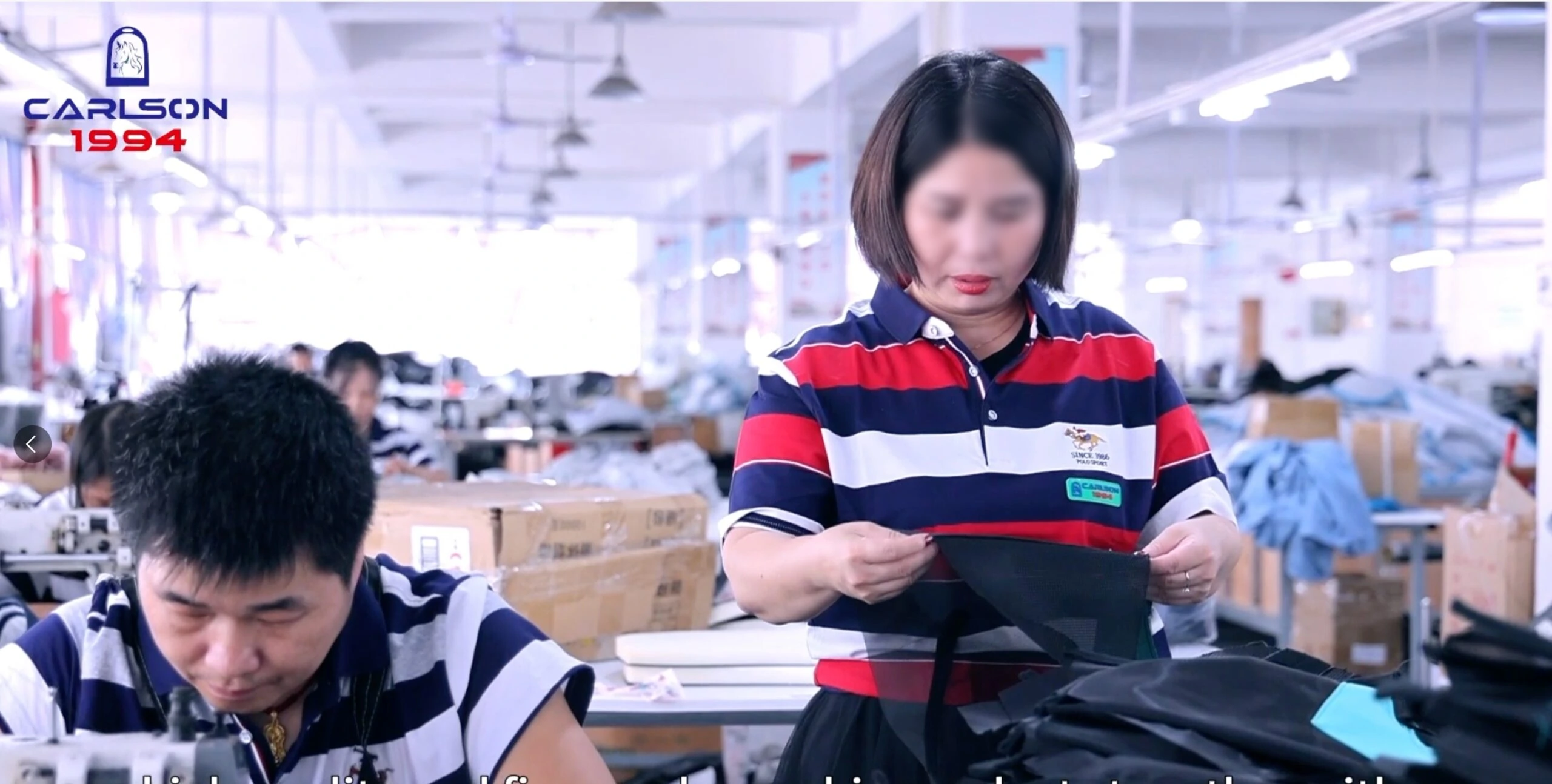
Carlson Saddlery is a professional horse tack manufacturer in China founded in 1994. We support overseas equestrian brands, wholesalers, distributors, importers, and private-label buyers with OEM manufacturing, private-label development, sample production, custom branding, packaging customization, quality control, export packing, and repeat bulk supply.
Our product range includes saddle pads, half pads, horse blankets and rugs, fly masks, horse boots, halters, lead ropes, girths, fly veils, bandages, grooming supplies, stable supplies, and equestrian accessories.
For MOQ planning, we help buyers review product category, material choice, logo method, packaging requirements, color and size range, sample needs, and repeat order potential. The goal is to recommend a practical production plan, not just quote a number without context.
If you are sourcing custom horse tack, you can explore our wholesale equestrian product categories or contact Carlson Saddlery with your product requirements.
FAQ: MOQ for Custom Horse Tack
What does MOQ mean in custom horse tack manufacturing?
MOQ means minimum order quantity. In custom horse tack manufacturing, it refers to the minimum quantity required to produce a product efficiently based on material, logo method, packaging, color, size, and production setup.
What is the usual MOQ for custom horse tack?
For many standard horse tack products, a practical MOQ reference is usually around 100–300 pcs per style. The final MOQ depends on product category, material availability, color requirements, logo method, packaging, size range, and customization level.
Why is MOQ different for each horse tack product?
MOQ differs because each product has different materials, production steps, size ranges, logo options, and packaging requirements. A saddle pad, fly mask, horse boot, and horse blanket may each require different production planning.
Can MOQ be lower for private-label horse tack?
MOQ may be more flexible when buyers use existing product styles with simple private-label customization such as woven labels, hangtags, or standard packaging. Fully custom OEM products usually require higher MOQ.
Does custom packaging increase MOQ?
Yes, custom packaging can increase MOQ because printed bags, insert cards, retail boxes, and barcode systems may have separate minimum production quantities from packaging suppliers.
How can buyers reduce MOQ pressure?
Buyers can reduce MOQ pressure by using existing product patterns, choosing stock materials, limiting colors and sizes, starting with simple logo methods, using standard packaging, and planning repeat orders.
What information should I send to get an accurate MOQ quote?
Buyers should send product category, reference image or sample, estimated quantity, material preference, colors, sizes, logo requirements, packaging details, and target market information.
Can Carlson Saddlery support MOQ planning for custom horse tack?
Yes. Carlson Saddlery supports MOQ planning for custom horse tack, OEM equestrian products, and private-label horse tack programs, including product review, material selection, logo options, packaging requirements, sampling, and bulk production planning.
Final Thoughts
MOQ for custom horse tack is not a fixed number that applies to every product. For many standard styles, 100–300 pcs per style can be used as a practical early reference, but the final MOQ depends on product category, material, logo method, packaging, colors, sizes, customization level, and buyer’s long-term order plan.
For wholesale buyers, the best MOQ strategy is not always the lowest MOQ. A better approach is to choose a practical order structure that reduces sourcing risk, controls unit cost, supports product quality, and leaves room for repeat orders.
To discuss MOQ for custom saddle pads, horse blankets, fly masks, horse boots, halters, lead ropes, or private-label equestrian products, visit our Contact Carlson Saddlery page and send your product details.