
Develop custom saddle pads around your target market, brand identity and product specification. Carlson Saddlery supports custom English saddle pad development for jumping, dressage and all-purpose collections, with options for shape, fabric, quilting, padding, lining, colors, binding, piping, logos, labels and retail packaging.
From an existing reference sample to a completely new private-label concept, we support development from specification review and sampling through approved bulk production.
Looking for broader OEM and wholesale capability? View our saddle pad manufacturing capabilities .
A custom saddle pad program can involve much more than choosing a color and adding embroidery. Shape, fabric, quilting, filling, lining, binding, piping, logo construction and packaging all influence product appearance, production cost and brand positioning.
Carlson Saddlery works with equestrian brands, wholesalers, distributors and importers to turn reference products, sketches, technical packs or product ideas into production-ready saddle pad specifications.
If you are still comparing existing constructions before developing a new design, browse our saddle pad collection for jumping, dressage, all-purpose, mesh and quilted styles.
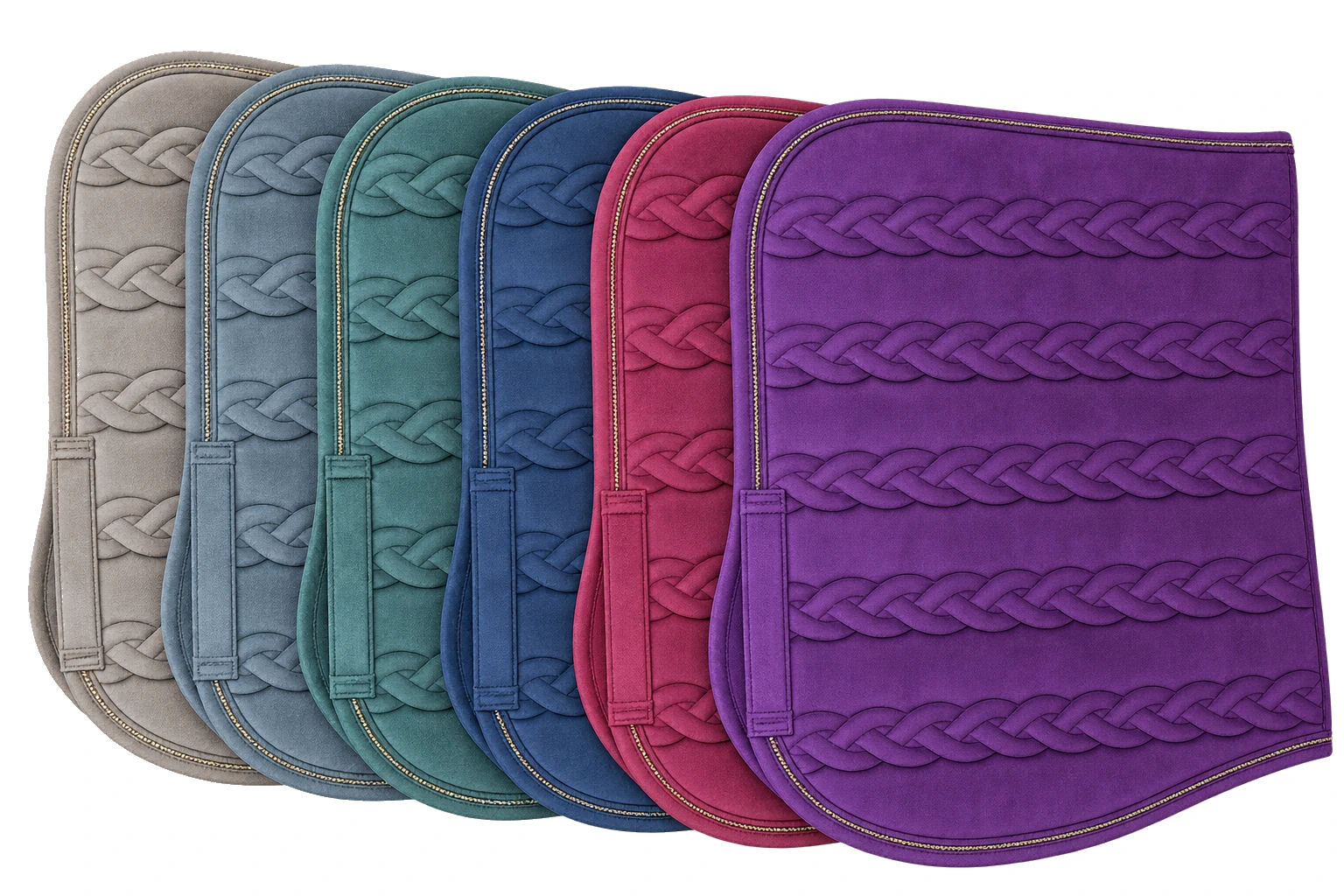
Custom development can start with a proven saddle pad construction or with your own specification. The options below can be combined according to your target market, price position and collection concept.
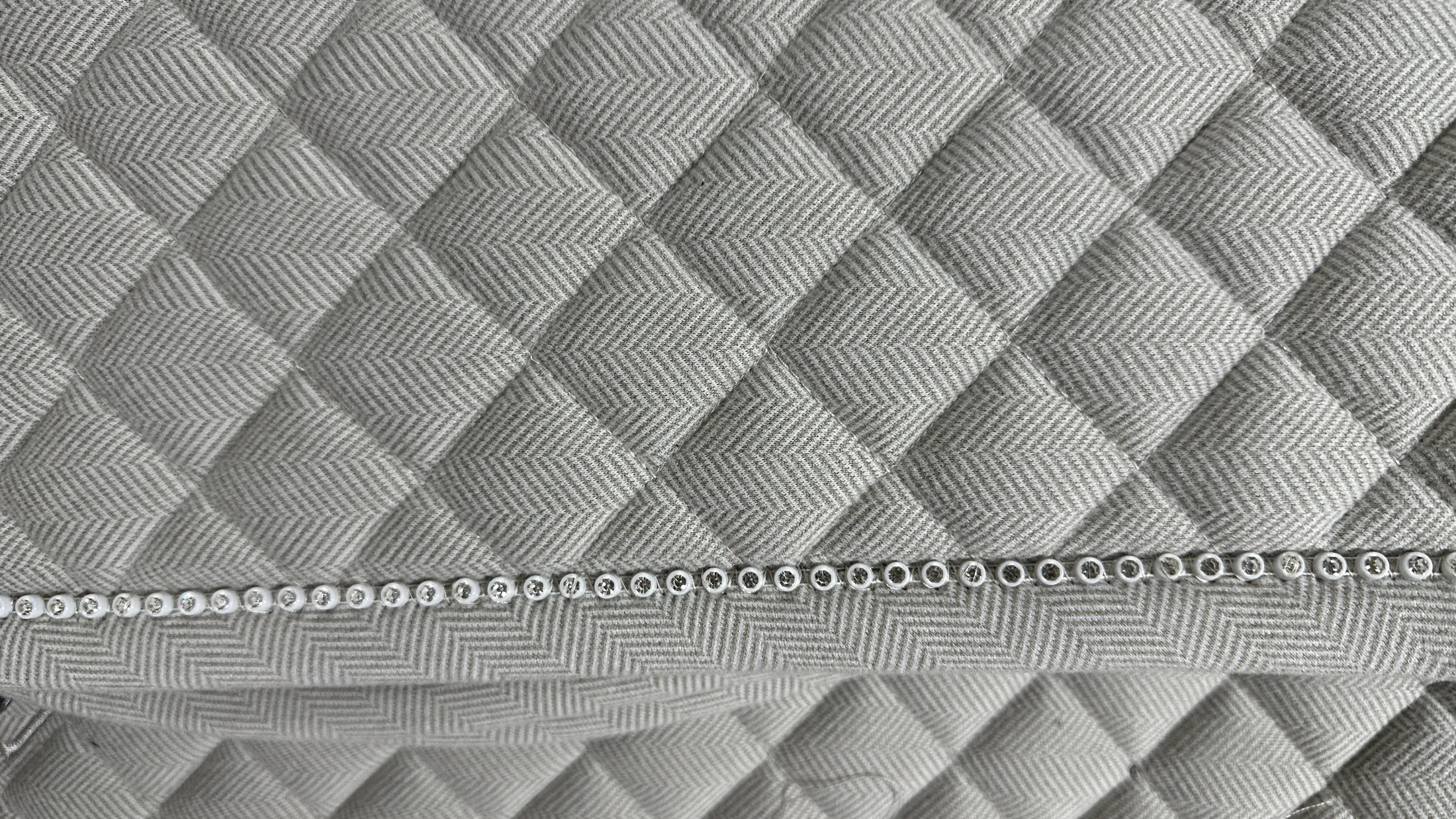
Shape and construction can be developed around different riding disciplines and brand positions, while quilting, materials, trims and branding provide further differentiation.
Develop forward-cut jumping saddle pads with custom fabrics, quilting, binding, piping, padding and branding for jumping and eventing collections.
Create dressage saddle pads with longer side panels, tailored quilting, selected trims and private-label branding for dressage-focused collections.
Develop versatile all-purpose designs for general retail ranges, riding programs and broader equestrian collections.
Develop saddle pads using 3D mesh constructions, custom panel combinations and coordinated trims for technical or performance-focused ranges.
Select or develop quilting patterns together with fabric, padding, binding and logo details to create a more recognizable private-label product.
Combine selected fabrics, faux fur trims, piping, embroidery or metal branding to create differentiated seasonal or premium collections.
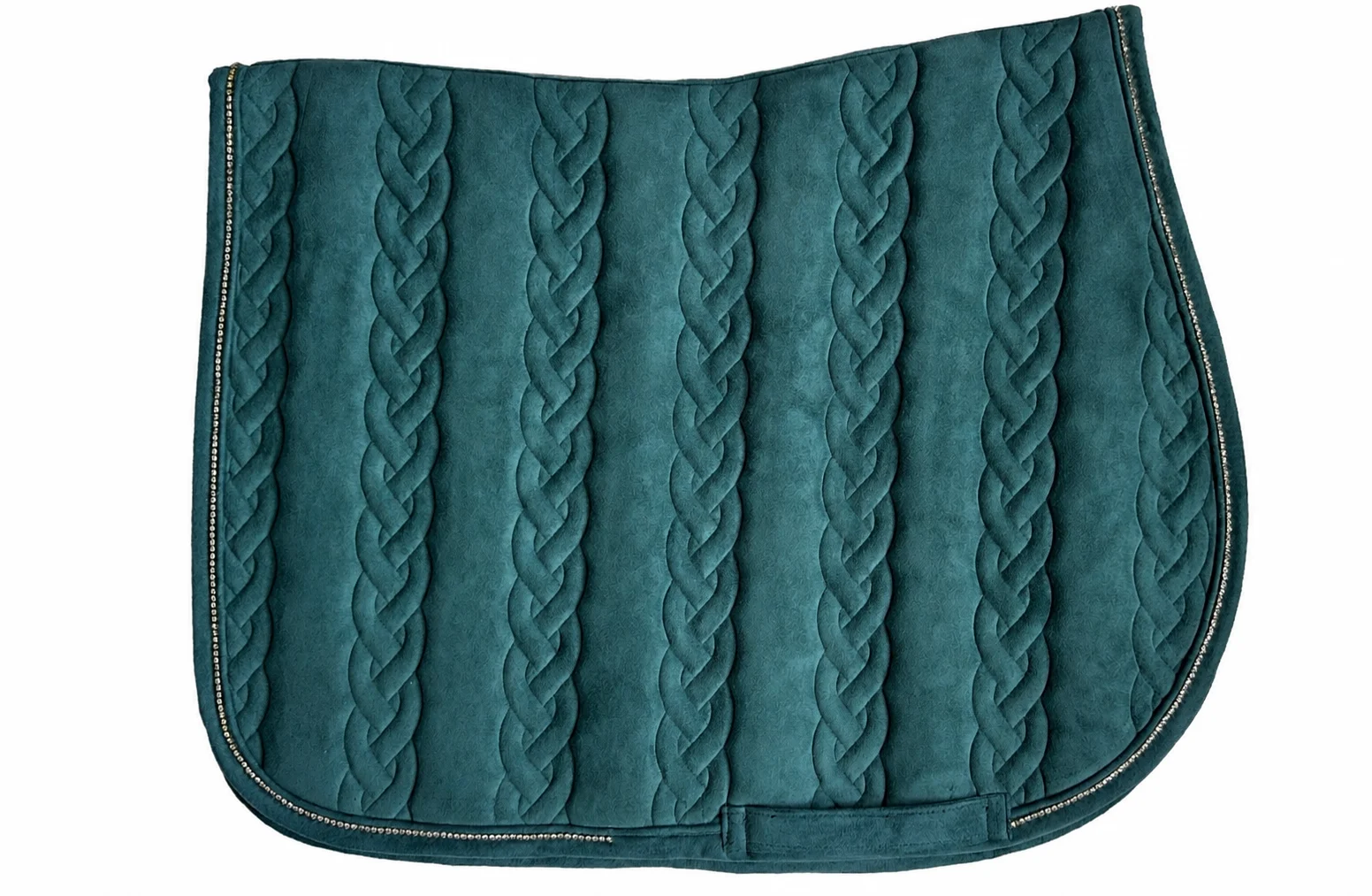


Dressage saddle pads can be developed with longer side panels, customized toplines and buyer-specific quilting patterns.
Shape, quilting, fabric, binding and branding can be coordinated to create a distinct product for a private-label dressage collection.
There is no single material combination that is right for every saddle pad. Material selection should consider target retail price, appearance, structure, hand feel, riding discipline and buyer requirements.
| Component | Typical Options | Development Consideration |
|---|---|---|
| Outer Fabric | Cotton, polyester, satin, corduroy, jacquard, 3D mesh | Appearance, durability, hand feel and target positioning |
| Inner Layer | Foam and polyester filling combinations | Thickness, structure, flexibility and finished appearance |
| Lining | Cotton, polyester, mesh and selected functional fabrics | Skin-side feel, moisture management and target specification |
| Binding | Cotton, polyester, satin and custom binding | Edge appearance, wear resistance and color coordination |
| Piping | Matching, contrast, metallic, single or multiple piping | Brand identity and collection positioning |
| Branding | Embroidery, woven label, rubber patch, metal plate | Logo size, placement, cost and retail presentation |

The finished feel of a saddle pad depends not only on the outer fabric. Foam, filling, lining and the way these layers are combined influence overall thickness, structure and flexibility.
During custom development, buyers can define the target construction or provide a reference sample for comparison. The selected combination can then be reviewed during sampling before the bulk specification is approved.
For a deeper comparison of fabrics, linings, padding and construction options, review our saddle pad material guide .
Share reference photos, drawings, target dimensions, materials, colors, logo files, packaging needs and estimated quantity.
We review construction details, material availability, customization requirements, MOQ considerations and production feasibility.
Confirm outer fabric, lining, filling, quilting, binding, piping, logo method and color requirements.
A physical sample is produced so you can review shape, materials, workmanship, branding and packaging details.
Required adjustments are recorded and confirmed before the approved production specification is finalized.
Production follows the approved specification with checks covering materials, dimensions, quilting, binding, branding and workmanship.
For a broader view of our OEM process and multi-category production capability, see Carlson Saddlery's horse tack manufacturing capabilities .
A clearer product brief allows us to review feasibility, materials, sample requirements and quotation details more efficiently.
For private-label programs, customization should create a consistent product identity rather than simply placing a logo on an existing style.
Fabric texture, quilting pattern, binding width, piping combination, special trims, logo scale, color palette, labels and packaging can be coordinated so the finished saddle pad fits the visual direction of your brand.
Buyers developing a broader range can also coordinate saddle pads with fly veils, horse boots, bandages, halters and lead ropes to build matching seasonal or core equestrian collections.
Learn more about multi-category brand development through our private label equestrian product development service.


Two saddle pads that look similar in a photo can have different material specifications, construction methods, branding requirements and packaging costs.
Outer fabric, lining, foam, filling and specialty materials can significantly affect product cost.
Standard quilting is generally easier to produce than buyer-specific patterns requiring additional programming or sewing control.
Embroidery, woven labels, rubber patches and metal logo plates involve different setup and unit-cost considerations.
Stock colors and custom-dyed fabrics can involve different material minimums and development requirements.
Quantity per design and color affects material purchasing, production setup, packaging and overall manufacturing efficiency.
Standard export packing differs from custom retail bags, printed inserts, hangtags, barcode labels and e-commerce packaging.
Sample approval should confirm more than appearance. Key construction, dimensions, branding and packaging details should be agreed before bulk production.
| Checkpoint | What the Buyer Should Review |
|---|---|
| Overall Shape | Topline, panel shape, front cut, rear shape and saddle compatibility |
| Dimensions | Back length, drop, strap position and size grading |
| Fabric | Color, texture, hand feel and approved material specification |
| Quilting | Pattern size, alignment, stitch consistency and overall appearance |
| Padding | Thickness, structure and consistency across the pad |
| Binding & Piping | Color, width, tension, curves and edge workmanship |
| Logo | Size, position, color, embroidery density or attachment method |
| Labels | Brand label, size label, care label and country-of-origin requirements |
| Packaging | Folding method, retail bag, barcode, hangtag and carton requirements |

Once the production specification is approved, bulk saddle pads should remain consistent with the confirmed materials, dimensions, quilting, trims, branding and packing requirements.
Fabric, lining, filling, binding and trims are checked against the approved order specification.
Key dimensions and overall shape are checked to help maintain consistency across bulk production.
Quilting alignment, stitch quality, skipped stitches and visible workmanship are reviewed.
Edge finishing, tension, curves, joins and piping consistency are inspected.
Logo position, orientation, dimensions, color and attachment are checked against approved requirements.
Size labels, barcode labels, hangtags, folding, individual packing and carton requirements are checked before shipment.
For more information about inspection standards, sample-to-bulk consistency and common sourcing risks, review our horse tack quality control and sourcing FAQ .

| Item | Reference |
|---|---|
| Order Type | OEM, Private Label, Wholesale |
| Typical MOQ | Usually 50–100 pieces per design / color depending on material and customization |
| Sample Development | Available before bulk production |
| Typical Sample Lead Time | Approximately 15–20 working days depending on development requirements |
| Bulk Production | Approximately 45–60 days after PPS approval and deposit, depending on order requirements |
| Custom Branding | Embroidery, woven labels, rubber patches, metal plates and selected custom branding methods |
| Packaging | Custom polybags, retail bags, hangtags, insert cards, barcode labels and export cartons |
| Buyer Types | Equestrian brands, wholesalers, distributors, importers and private-label buyers |
MOQ and lead time depend on fabric availability, custom colors, quilting, logo method, packaging and order quantity. Final requirements are confirmed during quotation and sample development.
Product pages show what can be made. Case studies show how development decisions move from concept and sampling into a production-ready order.
See our private label saddle pad development case study for a closer look at an individual saddle pad project.
Buyers planning a broader product launch can also review our coordinated private-label horse tack collection case study to see how multiple product categories can be developed within one program.
Yes. Buyers can provide reference photos, drawings, technical packs, measurements or physical samples. We can review the design and discuss suitable materials, construction methods and customization options before sample development.
Yes. Jumping, dressage and all-purpose shapes can be adjusted according to buyer requirements, including topline, panel dimensions, front profile and overall proportions.
Yes. Custom quilting patterns can be reviewed based on artwork, pattern complexity, sewing feasibility and order requirements.
Yes. We can review available stock colors or discuss custom color development. Custom-dyed materials may require higher material minimums depending on the fabric.
Yes. Lining, foam thickness, filling and layer combinations can be developed according to the target product specification and material availability.
Yes. Common options include embroidery, woven labels, rubber patches and metal logo plates. The most suitable method depends on the design, fabric, logo size, target cost and brand positioning.
Yes. Coordinated colors, trims, logos and packaging can be developed across saddle pads, fly veils, horse boots and selected horse tack accessories for matching private-label collections.
Send the saddle pad type, reference images or drawings, dimensions, fabric preference, lining and padding requirements, quilting design, colors, logo file, packaging requirements, size range and estimated order quantity.
Yes. Sample development allows buyers to review the specification, materials, shape, workmanship, branding and packaging before bulk production.
A typical starting range is approximately 50–100 pieces per design or color, but the actual MOQ depends on fabric, custom color requirements, quilting, logo method, packaging and other customization details.
Review wholesale saddle pad production, OEM manufacturing capability and bulk order support.
View Saddle Pad Manufacturing Capability →Browse existing jumping, dressage, all-purpose, quilted, mesh and specialty saddle pad styles.
Browse Saddle Pads →Learn how branding, labels, packaging and coordinated horse tack collections can be developed.
Explore Private Label Production →Compare fabrics, linings, padding and material combinations for different saddle pad programs.
Read Saddle Pad Material Guide →Review quality risks, inspection points and production controls relevant to custom horse tack orders.
View Quality Control →See a real saddle pad development project from initial concept through sampling and production.
View Saddle Pad Case Study →Send us your reference image, drawing or existing sample together with your target quantity, materials, colors, logo and packaging requirements. We can review the project and discuss suitable options for sample development and bulk production.