
Equine Red Light Therapy Wraps for Localized Horse Care
Explore flexible red and near-infrared LED wearables developed for the legs, hoof area, head, neck, thoracic region and back. This page helps equestrian brands, distributors and professional buyers compare formats, understand applications and define a responsible product specification.
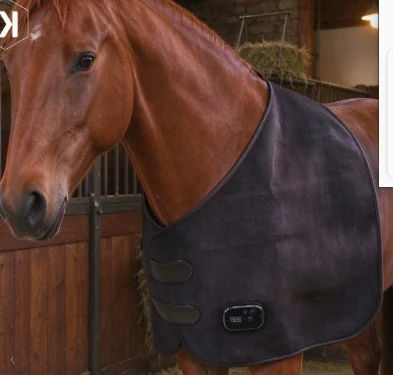
What is an equine red light therapy wrap?
An equine red light therapy wrap is a wearable light-delivery product that positions red and/or near-infrared LEDs close to a selected region of a horse. The format enables repeatable localized light sessions without requiring the operator to hold a lamp throughout the session.
These products may be incorporated into routine post-training stable care, localized maintenance sessions, competition or travel routines, and veterinary-guided care programs. They are not a substitute for veterinary diagnosis or treatment, and the wearable itself does not prove a clinical outcome.
Where Equine LED Wraps Fit Into Professional Horse Care
The practical value of a wearable depends on more than light output. Fit, coverage, stable positioning, fastening, pressure distribution, controller access and cleaning all influence how consistently the product can be used.
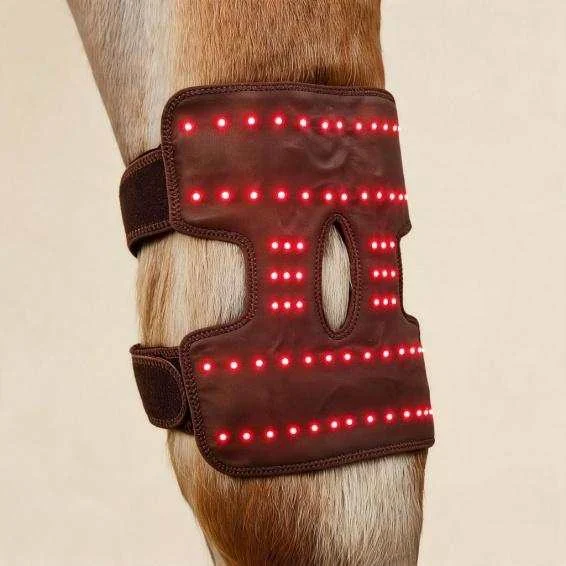
Post-training stable routines
Leg, knee and hoof-area formats provide localized LED coverage as part of an established after-work routine. Use should follow the stable’s care protocol and should not delay veterinary assessment of pain, swelling, lameness or injury.
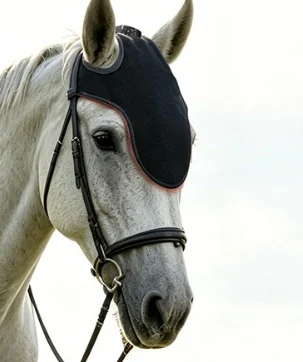
Veterinary-guided localized use
Body-area-specific shapes help position the LEDs over a selected region. Session timing, frequency and suitability should be determined for the individual horse and intended protocol.
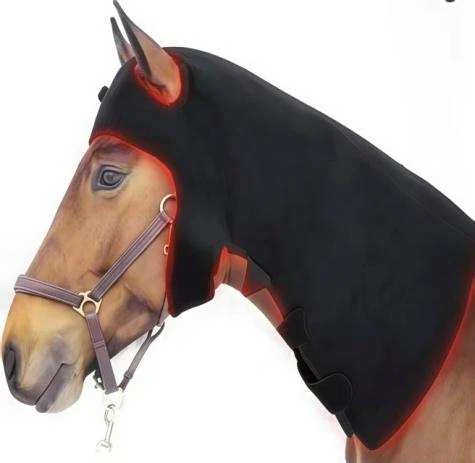
Training and sport-horse facilities
Wearable formats can help teams standardize placement and operating steps across a stable. Professional facilities should document fitting, inspection, cleaning and storage procedures.
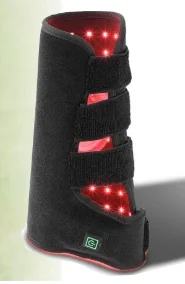
Competition and travel use
Compact formats and rechargeable controller options may be useful when portability matters. Battery rating, charging equipment, storage conditions and transport requirements must be confirmed for the final product.
Eight Body-Area-Specific Equine LED Wrap Formats
All photographs below show real development samples or real fitting views. The figures are not computer-generated product concepts. Listed values are reference configurations from the current development file and must be confirmed in the final buyer specification.
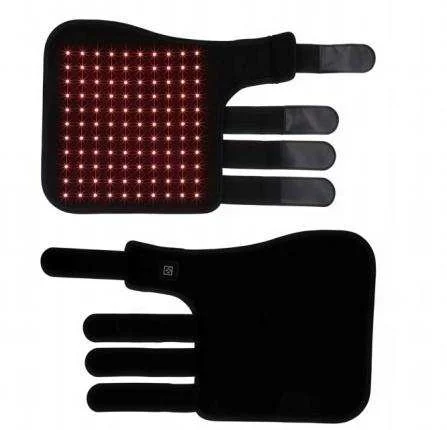
General leg wrap
Broad flexible panel for localized leg coverage.
Hind-leg knee pad
Shaped coverage around the rear-leg joint region.
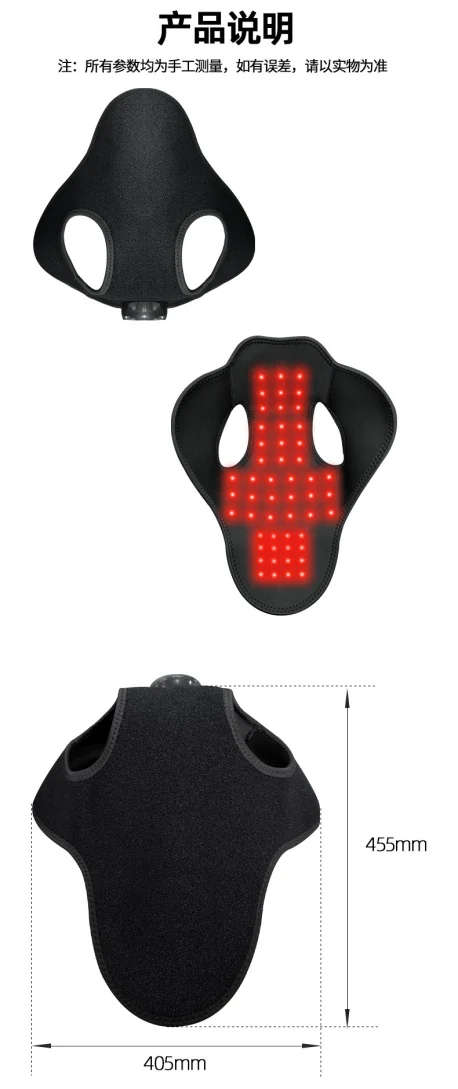
Head wrap
Contoured format for selected head areas.
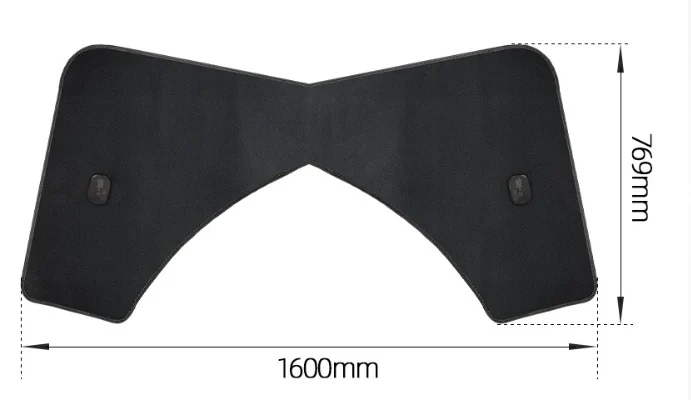
Thoracic-region wrap
Large-area wearable for the barrel and thoracic region.
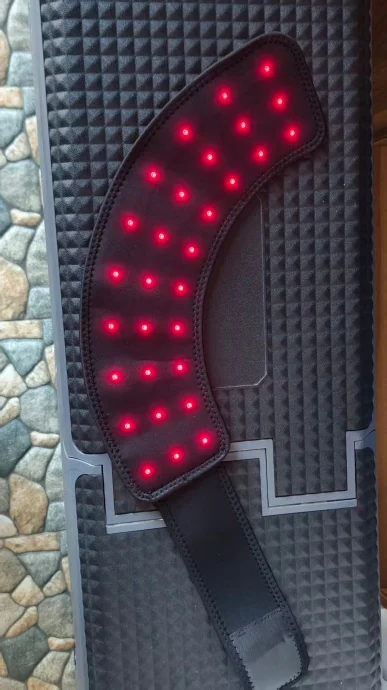
Hoof-area wrap
Compact shaped unit for close placement around the hoof region.
Neck wrap
Shaped panel for broader coverage along the horse’s neck.
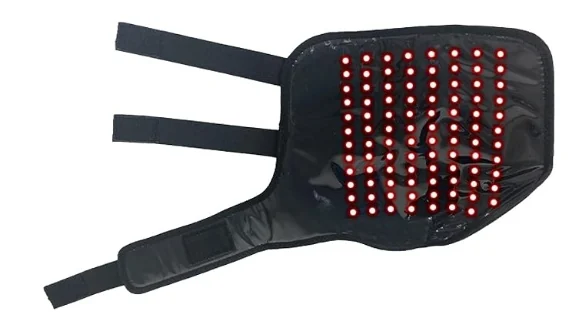
Compact leg wrap boot
Portable format for targeted leg-area use.
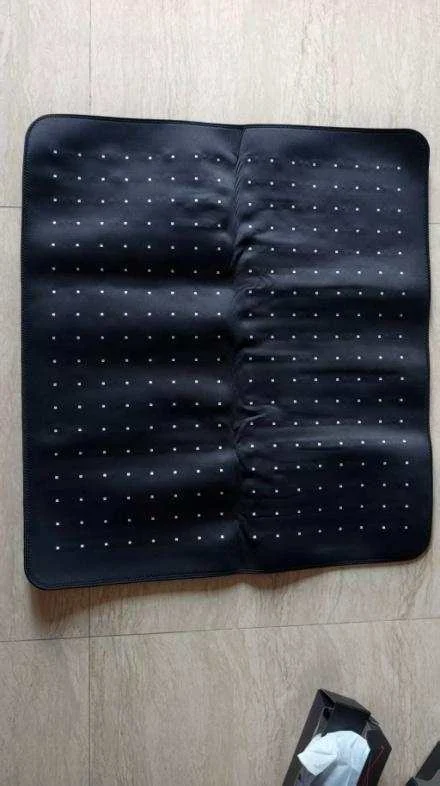
Back mat
Large mat-style format for broad dorsal coverage.
660 nm Red Light and 850 nm Near-Infrared Light
Photobiomodulation describes the use of non-ionizing light to influence biological processes. Red and near-infrared light occupy different wavelength ranges and should not be treated as interchangeable marketing terms.
- Red light around 660 nm is visible and is generally associated with more superficial light delivery.
- Near-infrared light around 850 nm is largely invisible to the eye and is commonly selected where deeper penetration is intended.
- Dual-wavelength products require a defined LED ratio, irradiance, session time and measurement method.
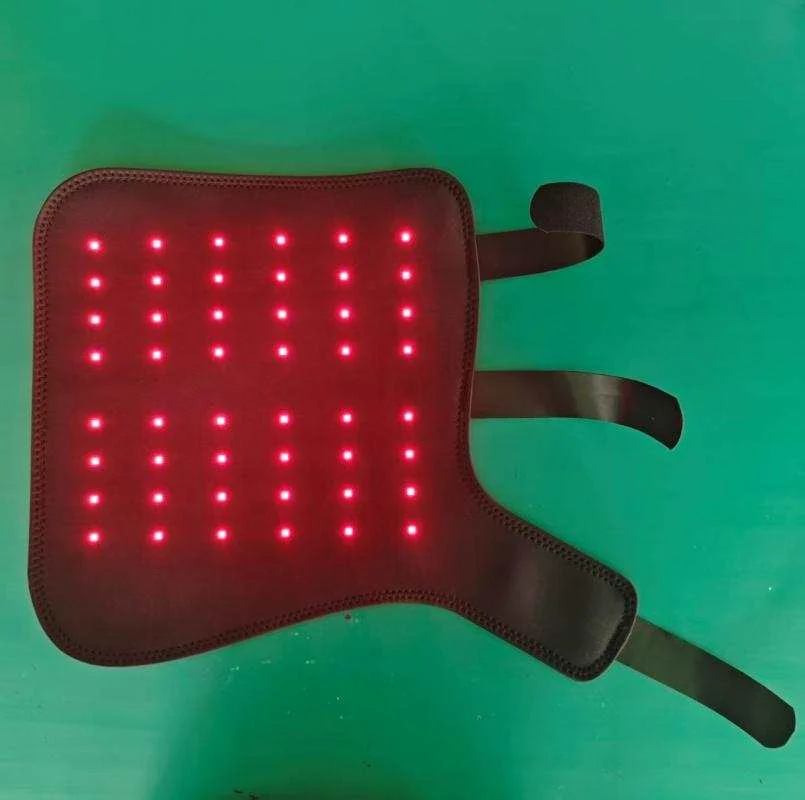
The current development file references 660 nm and 850 nm. The final wavelength mix and counts should be documented for each SKU.
What Professional Buyers Should Verify
LED count alone does not establish performance. A purchasing specification should define the factors that influence delivered light, product safety and repeatable operation.
| Specification | Why it matters | Buyer documentation |
|---|---|---|
| Wavelength | Distinguishes visible red and near-infrared output. | Nominal wavelength and tolerance for each LED type. |
| Irradiance | Describes optical power delivered per unit area. | mW/cm² under stated test conditions. |
| Energy dose | Connects irradiance with treatment time. | J/cm² for each documented session setting. |
| LED layout | Affects coverage uniformity and red/NIR balance. | LED map, spacing and count by wavelength. |
| Heat and electrical safety | The device remains close to the horse. | Surface temperature, power, battery, charger and applicable test records. |
| Fit and cleaning | Movement, pressure, moisture and hygiene affect use. | Size method, fastening, inspection, cleaning and storage instructions. |
Veterinary-Informed Fit and Coverage
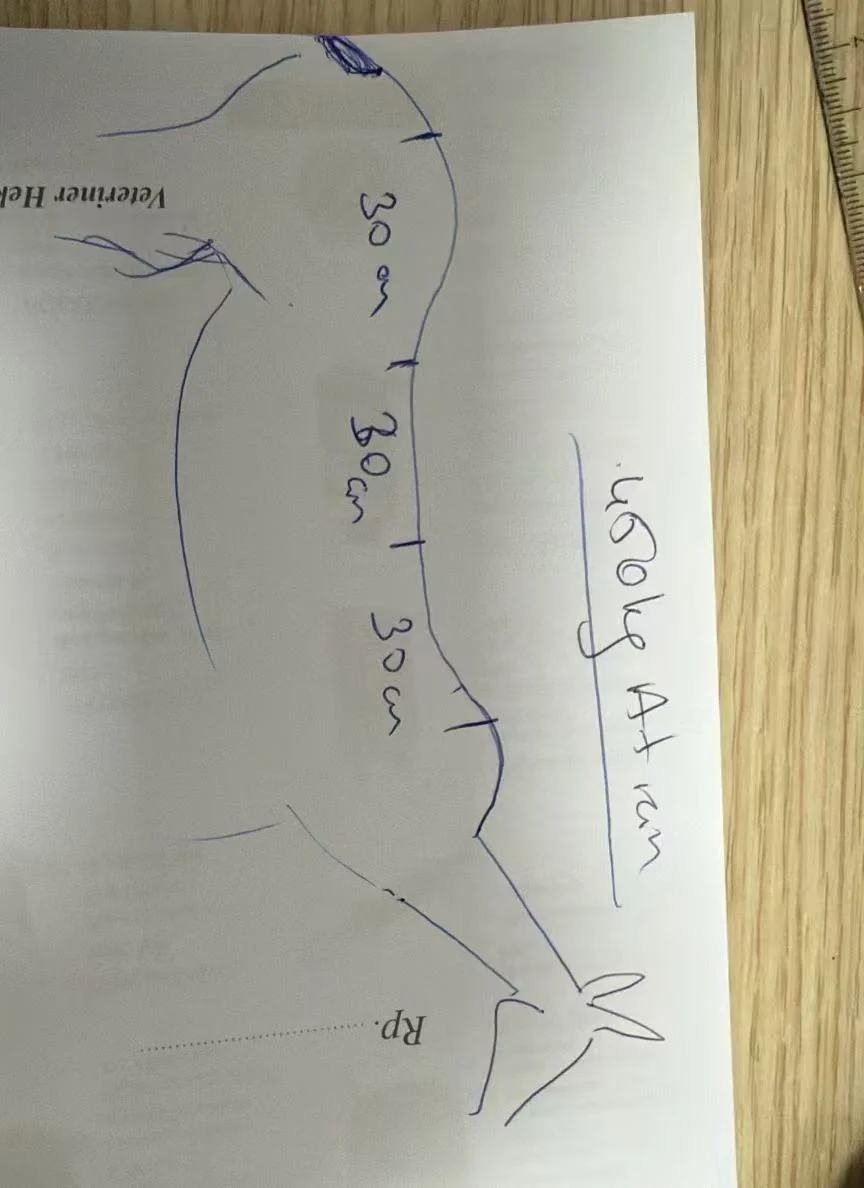
The wearable formats were developed with input from veterinary professionals in Europe. That input included anatomical coverage and measurement suggestions used to improve shape, positioning and usability.
Veterinary participation in design must be described accurately. It is not the same as a controlled clinical trial, regulatory clearance or proof that the device treats a named disease. Carlson Saddlery does not currently hold product-specific controlled clinical records establishing treatment efficacy for this range.
Buyers should define the intended use and sales market first, then establish the specification, instructions, warnings, evidence and testing required for that jurisdiction.
From Intended Use to a Production-Ready Specification
Carlson Saddlery can discuss wearable construction, textile panels, fastening, branding, packaging and controller configuration. Optical, electrical and compliance details must be confirmed as part of the final product file.
Define the application
Identify the body area, target user, operating environment, sales country and intended product language.
Confirm technical data
Document wavelengths, LED ratio, irradiance, dose, power, timer, temperature and dimensions.
Review the sample
Check fit, closures, cable routing, controls, cleaning, labels, instructions and packaging.
Approve production files
Sign off the specification, test requirements, branding, warnings, QC points and packing method.
Equine Red Light Therapy Wrap FAQ
What is an equine red light therapy wrap used for?
It delivers localized red and/or near-infrared LED light to a selected area of a horse. Typical settings include routine post-training care, stable maintenance, competition or travel routines, and veterinary-guided programs. It should not be presented as a guaranteed treatment for an injury or disease.
Is 660 nm the same as 850 nm?
No. Approximately 660 nm is visible red light and is associated with more superficial delivery. Approximately 850 nm is near-infrared and is commonly selected where deeper light penetration is intended. The product specification should identify the wavelength mix and measurement conditions.
Does a higher LED count mean a better wrap?
Not necessarily. Irradiance, energy dose, coverage uniformity, fit, thermal control and electrical safety are more informative than LED count alone.
Are these equine LED products clinically validated?
No product-specific controlled clinical records are currently available for this range. The real development samples were created with veterinary input on fit and anatomical coverage, but this is not equivalent to clinical validation.
Can the product shape and branding be customized?
Wearable geometry, textile construction, closures, branding, packaging and selected controller requirements can be discussed. Changes affecting optical output, electrical safety or intended use should be evaluated and documented.
What should a wholesale buyer confirm before ordering?
Confirm the intended use, sales market, classification, wavelengths, LED ratio, irradiance, dose, dimensions, power system, timer, cleaning method, warnings, testing, branding, packaging, MOQ and warranty terms.
This page provides product-development and sourcing information. It is not veterinary advice. A veterinarian should assess suspected pain, injury, infection, lameness or another medical condition.
Define an Equine LED Wrap for Your Market
Send the target body area, intended use, sales country, preferred power system, quantity and branding requirements. Our team can review the wearable construction and prepare a specification discussion.
Contact Carlson Saddlery